
Africa Cannot Only Use Artificial Intelligence. It Must Help Build What Intelligence Knows.
🌍 You’re reading Africa’s innovation network
EcoTech is a growing space for farmers, innovators, scientists, investors and contributors building practical sustainability solutions.
🌍 Help Build Africa's Knowledge Environment for AI
EcoTech Africa invites researchers, businesses, institutions and knowledge contributors to express interest in helping explore how trusted African knowledge, research, enterprise information and practical experience can be structured and made more useful within AI-assisted environments while protecting attribution, permissions and privacy.
View Participation PathwayArtificial intelligence is arriving in Africa quickly.
People are using it to write, research, translate, analyse information, develop software, prepare business documents, study and solve problems that previously required considerably more time and expertise.
That matters.
But there is another question Africa should be asking.
What does artificial intelligence actually know about us?
Not what does it know about Africa from reports written somewhere else.
Not what does it know from the most visible websites, international databases or material that happened to make its way onto the internet.
What does it know about the farmer developing a better cultivation method in North West?
What does it know about the small manufacturer in Malawi looking for a regional market?
What does it know about a researcher whose work never became digitally accessible?
What does it know about a young entrepreneur in Côte d’Ivoire who has knowledge, capability and a business, but very little digital visibility?
What does it know about the relationships between these people?
That is where Africa's artificial-intelligence discussion becomes much bigger than access to an AI tool.
Using intelligence is not the same as participating in it
Africa absolutely should have access to the world's best artificial-intelligence technologies.
There is little value in isolating the continent technologically or trying to reproduce every global system independently.
But access alone does not solve the deeper problem.
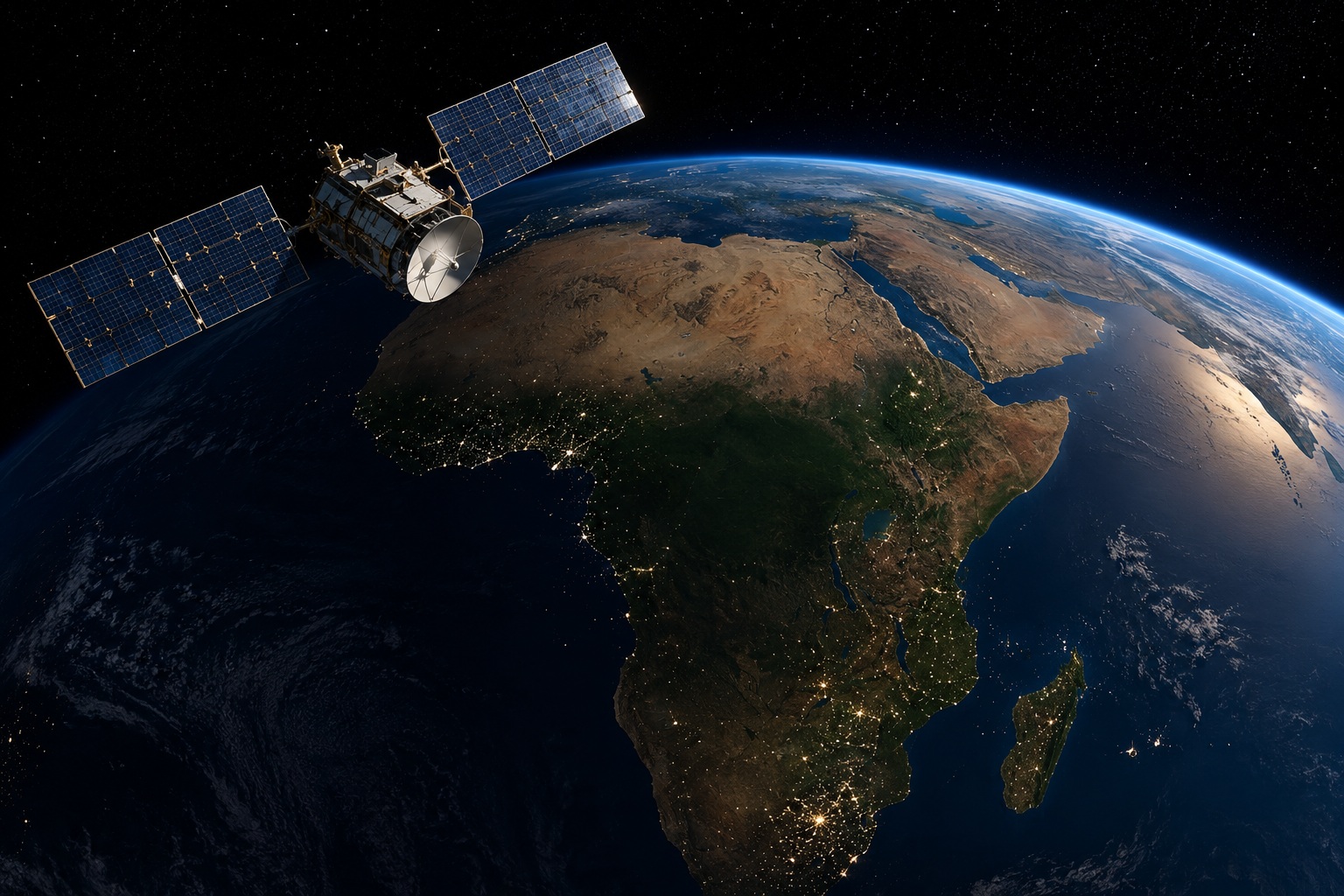
If African people, businesses, research, languages, institutions, products and economic activity remain poorly represented in the digital environment, increasingly powerful artificial intelligence can still operate with an incomplete picture of Africa.
And an incomplete digital picture eventually becomes an incomplete intelligence picture.
This concern is no longer theoretical.
The African Union's Continental Artificial Intelligence Strategy already treats AI as strategically important to Africa's development and calls for African capabilities in data, infrastructure, skills, research and innovation. African Union
In April this year, the AU Peace and Security Council went further, calling for African AI sovereignty and stronger African control across the AI ecosystem. It specifically highlighted the gaps in electricity, computing power, high-quality datasets, infrastructure and technical expertise. African Union PSC
The East African Community has similarly committed itself to AI systems built around regional languages and East African data, stored on regional infrastructure and governed within the region. East African Community
These are important ambitions.
But there is a layer underneath all of them.
Before knowledge can strengthen intelligence, somebody has to make that knowledge visible, structured, trusted and usable.
Africa's knowledge does not only sit in databases
Much of Africa's valuable knowledge is scattered.
It sits in people's experience.
It sits inside businesses.
It sits on farms.
It sits in universities and research projects.
It sits in documents on individual computers.
It sits in conversations between professionals.
It sits inside communities and institutions.
It sits in products that have never been properly catalogued, enterprises that have almost no digital presence and practical solutions that may be known within one community but invisible twenty kilometres away.
Some of it will never appear in a conventional internet search.
That creates an important distinction.
Africa does not only need more data.
Africa needs better ways for its people and institutions to participate in building its digital knowledge environment.
And participation requires more than uploading information.
We need to know who contributed it.
We need context.
We need relationships.
We need permissions.
We need to distinguish public knowledge from private information.
We need to know whether information belongs to a person, business, institution or research programme.
And where verification matters, we need mechanisms for establishing trust.
That is infrastructure.
This is where EcoTech's experiment becomes interesting
This is one of the questions we have increasingly encountered while developing EcoTech Africa.
We originally approached many of these systems as separate practical problems.
How does a person establish a trusted digital identity?
How does a small business become visible?
How can businesses present products without first building an expensive website?
How can people find opportunities?
How can documents move securely between participants?
How can African businesses publish information?
How can research become visible?
How can enterprises establish relationships with people and institutions?
Individually, these appear to be platform features.
Together, something different begins to emerge.
A verified person can have a Profile.
That person may be connected to an Enterprise.
The Enterprise can have products and services.
Those products can become part of an E-Store.
Information can move through CloudFeed.
Documents can move between authorised participants.
Businesses can prepare quotations and invoices.
Publishers can contribute knowledge.
Opportunities can connect participants.
Relationships between people, businesses and institutions can be established.
And each of those activities carries context.
That begins creating something considerably more useful than a collection of webpages.
It begins creating a structured African participation environment.
Then Echo changes too
This is where artificial intelligence becomes particularly interesting for us.
Echo does not become more useful to Africa simply because the underlying artificial intelligence becomes more powerful.
It becomes more useful when the environment within which that intelligence operates contains better African context.
That distinction matters.
We should not pretend that every EcoTech profile, document or interaction automatically trains a global artificial-intelligence model. It does not.
Nor should private African information simply be absorbed into an external system in the name of improving AI.
The opportunity is different.
The more authorised, structured African knowledge EcoTech can make available within Echo's operating context, the richer the African context from which Echo can assist its users.
A farmer asking a question could eventually be working within the context of a real agricultural network.
An entrepreneur looking for a supplier could be working within an environment containing verified African businesses.
An institution could work with its own documents, relationships and authorised organisational knowledge.
A researcher could contribute knowledge while retaining attribution.
An investor could discover actual enterprises and opportunities rather than trying to reconstruct Africa from disconnected internet searches.
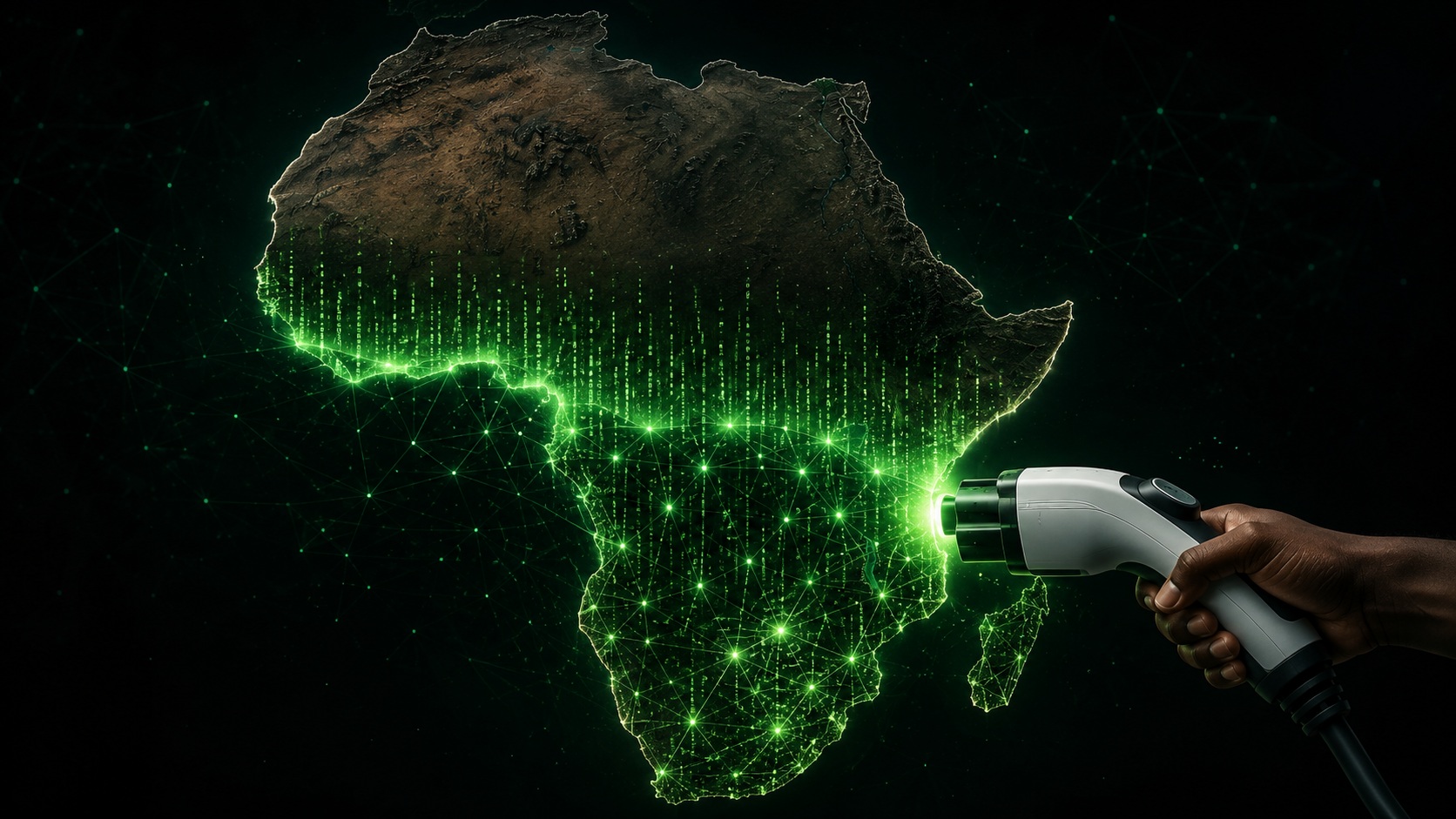
Artificial intelligence then becomes a layer working across an African participation environment—not a substitute for that environment.
Africa should contribute to what intelligence knows
There is an important balance here.
Africa does not need an artificial-intelligence wall around the continent.
Global knowledge is enormously valuable.
Global AI capability is enormously valuable.
African researchers, entrepreneurs and institutions should have access to both.
But the relationship should work in both directions.
Africa should be able to draw upon global intelligence while progressively strengthening the African knowledge environment from which that intelligence can operate.
That means Africans cannot only be users.
They must also be researchers, publishers, developers, businesses, knowledge contributors, infrastructure operators, data stewards and participants in deciding how AI is governed.
That discussion is now reaching the international stage. Developing nations used the September UN meetings to push for greater participation in determining AI's future, warning against a world in which technological rules and capabilities are concentrated among a relatively small number of wealthy countries. Reuters
Africa therefore has an opportunity to ask a more practical question.
Not simply:
How do we get AI into Africa?
But:
How do we get more of Africa into the knowledge environment from which AI understands the world?
Those are very different development questions.
The infrastructure underneath intelligence
There will be enormous investment in African data centres, connectivity, computing capacity and AI infrastructure over the coming years.
We need it.
But servers alone cannot describe Africa.
Fibre cannot explain a business.
Compute cannot establish whether an enterprise exists.
A data centre cannot create a relationship between a farmer, researcher, manufacturer and buyer.
People create that knowledge.
Businesses create it.
Researchers create it.
Communities create it.
Institutions create it.
Technology can help organise it, protect it, connect it and make appropriate parts of it useful.
That may ultimately be one of Africa's most important opportunities in artificial intelligence.
We do not only have to ask who will build Africa's AI.
We should also ask:
Who will build the African knowledge that makes intelligence about Africa worth having?
And the answer cannot only be governments, technology companies or international institutions.
It has to include Africans themselves.
🚀 Help Build Africa's Knowledge Environment for AI
EcoTech Africa invites researchers, businesses, institutions and knowledge contributors to express interest in helping explore how trusted African knowledge, research, enterprise information and practical experience can be structured and made more useful within AI-assisted environments while protecting attribution, permissions and privacy.
This pathway is linked directly to this published story. Browse EcoTech Opportunities to see this and other active participation pathways alongside CloudFeed opportunities.

Comments (0)
Join the Conversation
What do you think about this story? Share your view, a practical example, or a respectful challenge.
Comments are part of the EcoTech participation layer. Join from R49 once-off to participate, or log in if you already have an account.