Africa’s Biggest IPO Opens a Major Industrial Asset to Ordinary Investors
🌍 You’re reading Africa’s innovation network
EcoTech is a growing space for farmers, innovators, scientists, investors and contributors building practical sustainability solutions.
🌍 Explore African Industrial Investment Opportunities
This story highlights the growing role of African capital markets in opening major industrial assets to broader investment participation. EcoTech members with interests in investment, industrial development, finance or capital markets may wish to explore similar opportunities across the continent.
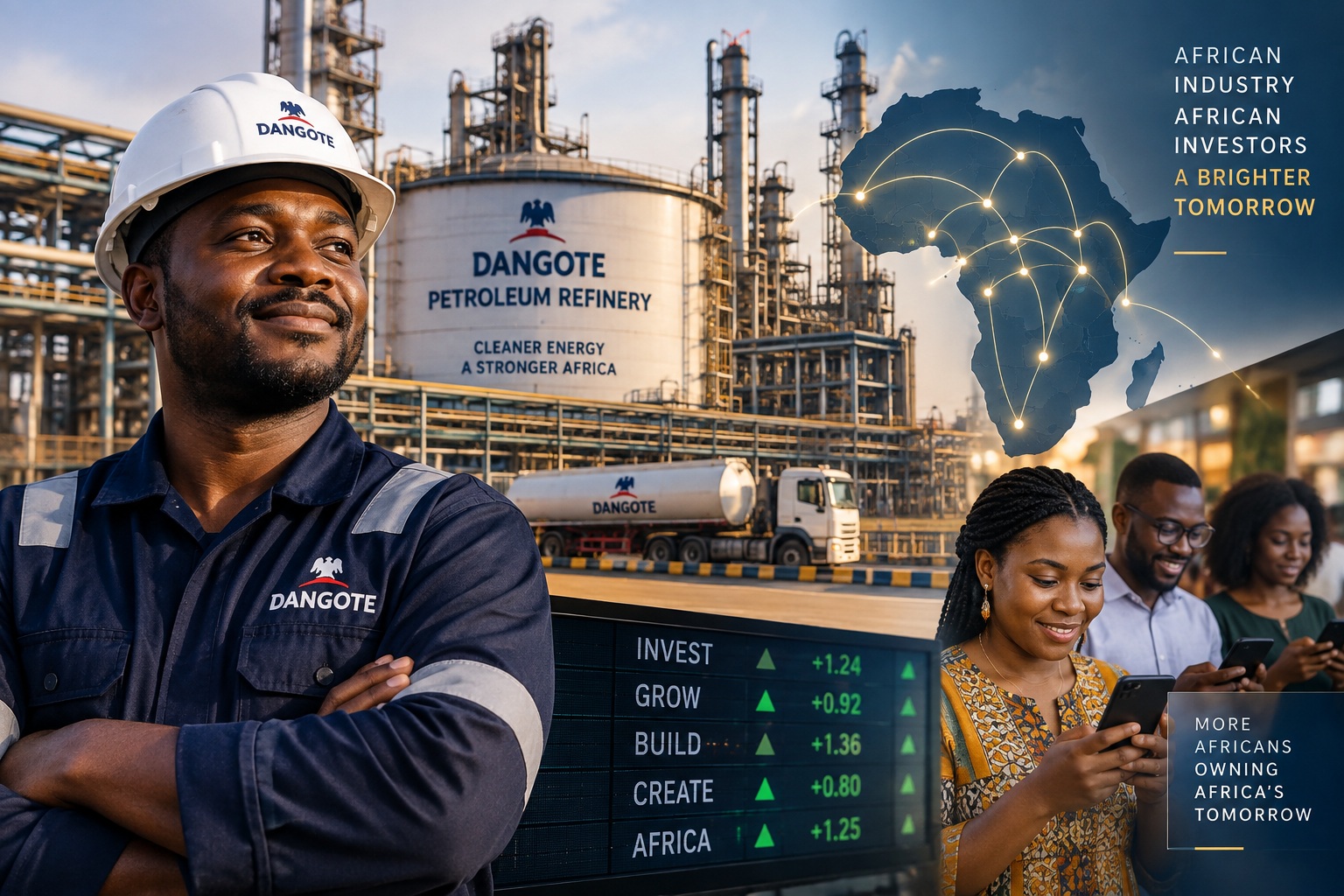
View Participation PathwayNigeria’s Dangote Petroleum Refinery has opened what is expected to become Africa’s largest initial public offering, creating an unusual opportunity for ordinary investors to take part in the ownership of one of the continent’s largest industrial assets.
The refinery is offering 4.1 billion shares at 525 naira each, with the base offer expected to raise around 2.15 trillion naira — approximately $1.6 billion. If demand exceeds the initial allocation and an additional share option is used, the amount raised could climb to about $2.1 billion.
The offer represents roughly 3% of the refinery and has been positioned as a public participation opportunity rather than an institutional transaction alone.
That distinction matters.
For many Africans, some of the continent’s largest industrial projects have traditionally remained distant from everyday investors.
They may create jobs.
They may change national production.
They may reduce imports.
But ownership has often remained concentrated among governments, large institutions and wealthy investors.
The Dangote offering introduces another possibility:
Africans participating directly in the ownership of major African industrial infrastructure.
A Lower Barrier to Participation
Retail participation has deliberately been made accessible.
Investors can subscribe for as few as 10 shares, which represents a minimum investment of only a few US dollars at current exchange rates. Applications can also be made through approved digital investment channels.
That has already attracted attention.
Reuters reported increased traffic on some Nigerian investment platforms following the opening of the offer, reflecting significant public interest.
Nigeria’s Securities and Exchange Commission has, however, cautioned investors to use only officially approved subscription channels and to verify platforms before transferring money or providing personal information.
This is an important part of the story too.
Making large investment opportunities more accessible requires not only technology, but also trusted financial infrastructure and investor protection.
More Than an IPO
The refinery itself represents one of Africa’s largest industrial investments.
Built at a cost of approximately $20 billion, the Lagos facility currently processes about 700,000 barrels of crude oil per day. It has begun reshaping Nigeria’s fuel market after decades in which one of Africa’s largest oil producers remained heavily dependent on imported refined petroleum products.
The company plans to use funds raised through the public offering to support further expansion, with a stated goal of increasing refining capacity to 1.4 million barrels per day by 2029.
That makes the transaction larger than a stock-market event.
It connects three important African questions:
Who builds major industrial infrastructure?
Where does the capital come from?
And increasingly:
Who gets to own part of it?
Capital Raised in Africa, for African Industry
Earlier this year, Dangote Refinery raised $2.5 billion through a private placement, bringing in institutional investors including the Africa Finance Corporation.
The new public offer moves part of that ownership conversation beyond large institutions and into the retail market.
This creates a useful model to watch.
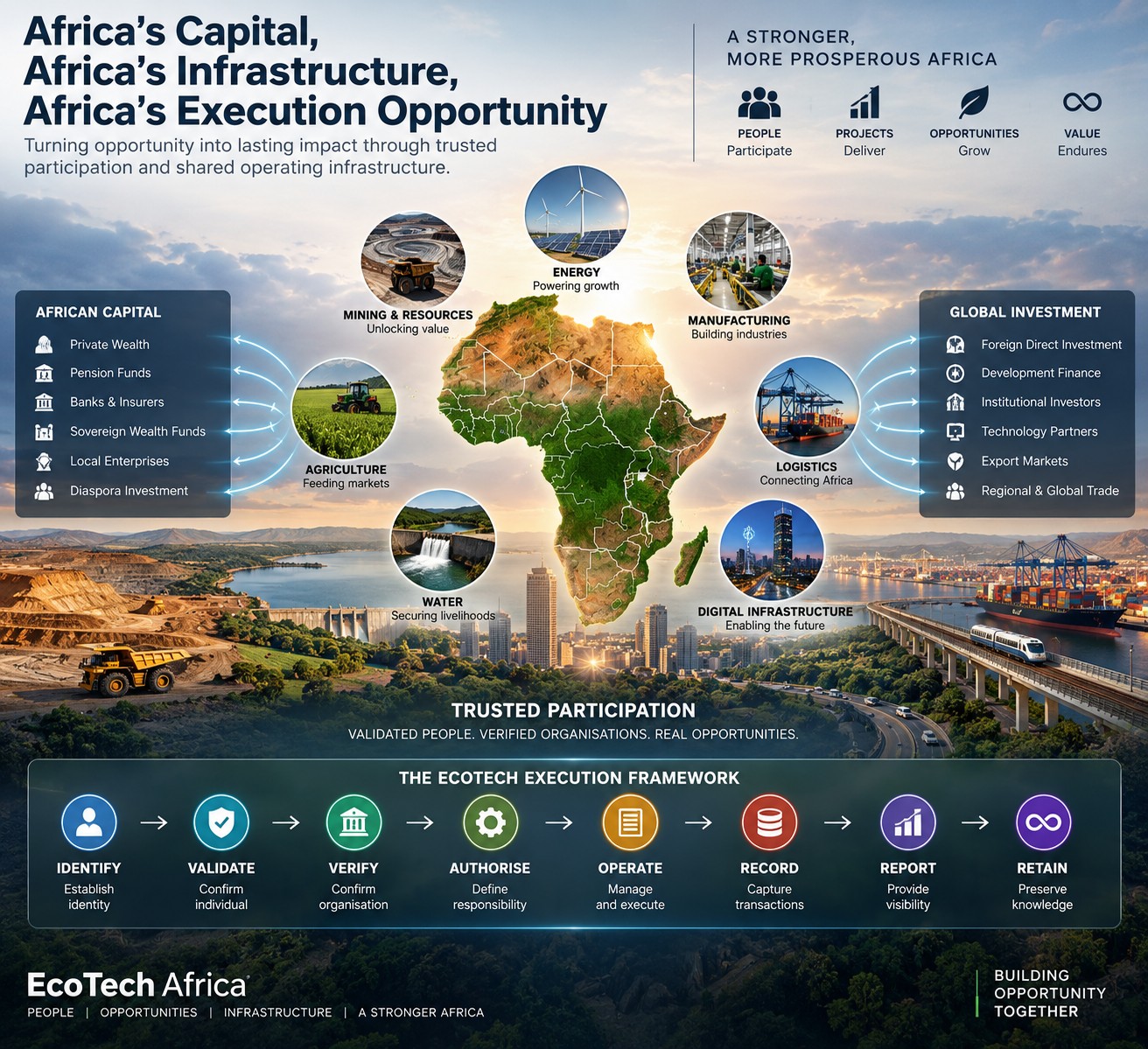
Africa needs enormous amounts of capital for energy, manufacturing, transport, digital infrastructure, agriculture and industrial development.
Much of that capital will continue to come from banks, development finance institutions, governments and international investors.
But Africa also has millions of citizens building savings, using digital financial services and looking for credible investment opportunities.
Connecting those pools of capital to productive African assets could become an increasingly important part of the continent’s development story.
The Key Insight
The significance of the Dangote IPO is not simply its size.
It is the idea behind it.
Large African industrial assets do not necessarily have to remain distant from African citizens.
If capital markets, trusted digital platforms and investor protections continue to improve, ordinary Africans may increasingly be able to participate in the ownership of the infrastructure and industries shaping the continent.
That creates a different relationship between industry and society.
People are no longer only consumers of what major companies produce.
They can also become shareholders in what Africa builds.
Real-World Application
The model could extend beyond petroleum refining.
Renewable-energy projects.
Food-processing facilities.
Logistics networks.
Telecommunications infrastructure.
Manufacturing plants.
Data centres.
Agricultural processing.
Transport infrastructure.
Well-governed public investment structures could allow more citizens to participate in the growth of productive African enterprises while helping companies raise capital for expansion.
The essential ingredients are transparency, credible regulation, affordable access and trusted systems.
Potential Impact
If more African companies use capital markets to fund growth while making participation accessible to ordinary investors, the continent could begin mobilising more of its own domestic capital.
That could deepen African financial markets, broaden ownership and create stronger links between household savings and productive investment.
The Dangote IPO will ultimately be judged by its performance as an investment.
But its wider significance may lie elsewhere.
It shows that some of Africa’s largest industrial projects can also become platforms for broader African ownership.
Sources: Reuters; Securities and Exchange Commission Nigeria
🚀 Explore African Industrial Investment Opportunities
This story highlights the growing role of African capital markets in opening major industrial assets to broader investment participation. EcoTech members with interests in investment, industrial development, finance or capital markets may wish to explore similar opportunities across the continent.
This pathway is linked directly to this published story. Browse EcoTech Opportunities to see this and other active participation pathways alongside CloudFeed opportunities.

Comments (0)
Join the Conversation
What do you think about this story? Share your view, a practical example, or a respectful challenge.
Comments are part of the EcoTech participation layer. Join from R49 once-off to participate, or log in if you already have an account.