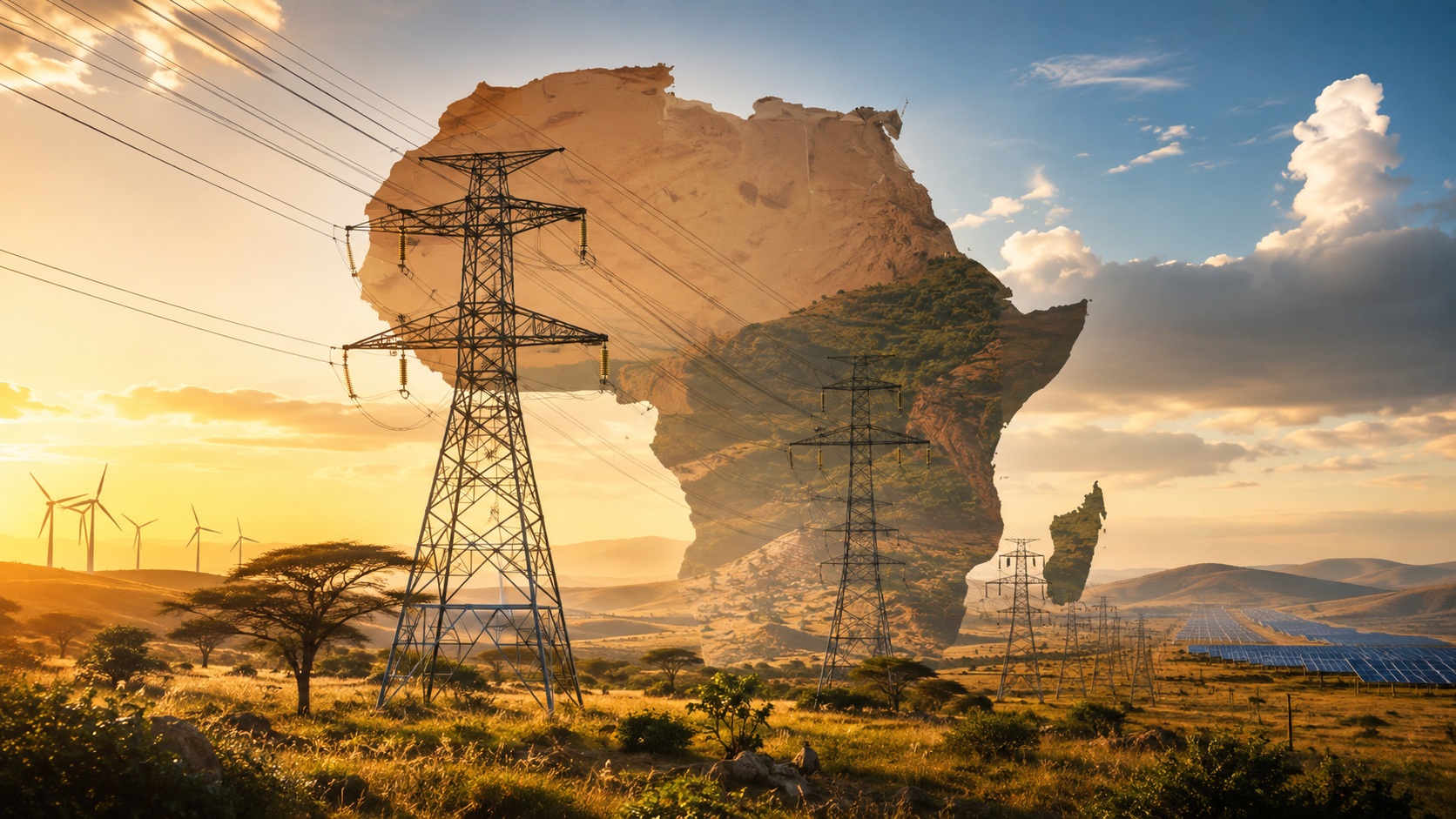
Africa’s Electricity Question: Who Produces It, Who Uses It, Who Pays for It — and What Comes Next?
🌍 You’re reading Africa’s innovation network
EcoTech is a growing space for farmers, innovators, scientists, investors and contributors building practical sustainability solutions.
🌍 Help Build Africa’s Energy Intelligence Picture
EcoTech invites utilities, renewable-energy developers, engineers, manufacturers, mines, municipalities, researchers, universities, farmers, businesses and energy users to contribute practical knowledge and data on electricity generation, consumption, cost, reliability and future demand across Africa.
View Participation PathwayElectricity sits at the centre of almost every modern economy.
It powers homes, mines, factories, farms, hospitals, schools, offices, telecommunications, data centres and public infrastructure.
Yet across Africa, the electricity conversation is often reduced to one question:
How do we generate more power?
EcoTech believes the discussion needs to go further.
Before deciding what comes next, we should understand four things clearly:
Who?
Where?
When?
What?
Who?
Who generates Africa’s electricity?
Who owns the generating assets?
Who buys the largest volumes of electricity?
Who receives preferential industrial tariffs?
Who finances new generation projects?
Who carries the cost of maintaining grids and infrastructure?
And ultimately:
Who pays the most relative to the value they receive?
Households often experience electricity through the monthly bill.
Large industries experience it through production costs.
Utilities experience it through generation, transmission and distribution.
Governments experience it through development policy, infrastructure and economic growth.
All of those perspectives matter.
Where?
Where is Africa’s electricity actually being used?
Is demand concentrated in:
- mines,
- smelters,
- manufacturing plants,
- cities,
- commercial centres,
- data centres,
- farms,
- irrigation systems,
- transport,
- households,
- or rural communities?
Knowing where electricity flows is essential.
A continent cannot plan its future energy system properly without understanding where demand exists today and where new demand is likely to emerge.
When?
Electricity demand changes throughout the day.
Renewable-energy generation changes too.
Solar generation peaks when the sun is available.
Wind generation depends on local conditions.
Industrial demand may remain relatively constant.
Household demand may rise sharply during mornings and evenings.
That makes when electricity is consumed almost as important as how much is consumed.
The timing of demand affects:
- grid stability,
- storage requirements,
- generation capacity,
- infrastructure investment,
- and ultimately the cost of electricity.
What?
What determines the price people actually pay?
The answer is rarely generation alone.
Electricity prices may include:
- generation costs,
- transmission,
- distribution,
- infrastructure investment,
- maintenance,
- municipal charges,
- system losses,
- financing,
- debt,
- taxes,
- subsidies,
- and regulatory decisions.
Understanding the electricity price means understanding the entire system.
Who Uses the Most Electricity?
This is one of the questions EcoTech believes deserves much more public attention.
The electricity conversation often focuses on household consumption.
But major electricity users can include:
- mining,
- mineral processing,
- heavy manufacturing,
- large commercial facilities,
- industrial agriculture,
- transport infrastructure,
- and increasingly digital infrastructure such as data centres.
That does not mean large users are doing something wrong.
Industry needs energy to produce goods, create jobs and support economic activity.
The more important question is:
What is Africa using its electricity for, and what economic and social value is being created from that consumption?
If a large amount of electricity is being used to process minerals locally, support manufacturing and create employment, that tells one development story.
If energy is being consumed without creating strong local value, that may tell another.
The point is not accusation.
The point is understanding.
Then Renewable Energy Enters the Conversation
Once we understand who uses electricity, where it is used, when it is needed and what it costs, we can ask a much better question:
What should renewable energy actually solve?
Should renewable energy primarily:
- lower household electricity costs,
- supply industry,
- electrify rural communities,
- strengthen grid capacity,
- power agriculture and irrigation,
- support manufacturing,
- reduce dependence on fossil fuels,
- improve reliability,
- support new industries,
- power digital infrastructure,
- or enable emerging sectors such as green hydrogen?
These objectives can overlap.
But they are not identical.
A renewable-energy strategy designed for large industry may look very different from one designed for rural electrification.
A system designed to reduce emissions may not automatically reduce household electricity prices.
A project designed for export-oriented energy production may not necessarily improve local energy access.
Understanding the objective matters.
Energy Abundance and Energy Poverty
Africa has extraordinary renewable-energy resources.
Large parts of the continent experience high levels of solar radiation.
Many regions have strong wind resources.
Hydropower remains significant.
Geothermal resources exist in important regions.
Biomass and other renewable technologies also have potential.
This creates an important development question:
Why should energy poverty exist alongside energy abundance?
The answer will not be solved by technology alone.
Infrastructure, financing, governance, grid capacity, affordability, skills, investment and long-term planning all matter.
Towards African Energy Intelligence
EcoTech believes Africa would benefit from a stronger shared understanding of its energy system.
Not simply how much electricity is generated.
But:
Where does it come from?
Where does it go?
Who uses it?
When is it used?
What does it cost?
What economic value does it create?
This could become part of a broader African energy intelligence network.
Businesses could voluntarily contribute energy-use information.
Researchers could analyse patterns.
Utilities and energy developers could contribute generation and infrastructure knowledge.
Communities could explain their access challenges.
Farmers could describe agricultural energy requirements.
Manufacturers could show how electricity costs affect production.
Universities and technical institutions could help validate and interpret the data.
The result would not simply be more information.
It could be better decision-making.
EcoTech Invites the Energy Community
EcoTech invites utilities, electrical engineers, renewable-energy developers, independent power producers, municipalities, regulators, mining companies, manufacturers, economists, universities, researchers, farmers, businesses and communities to engage with this discussion.
We would like to understand:
How much electricity do you use?
When do you use it?
What does it cost?
Where does it come from?
What would cheaper or more reliable electricity allow you to produce or achieve?
Africa’s energy future should not be designed around assumptions.
It should be informed by the realities of the people, businesses, industries and communities that actually use the energy.
Renewable energy is part of that future.
But first, we need to understand the system we are trying to improve.
Who.
Where.
When.
What.
And then:
What comes next?
🚀 Help Build Africa’s Energy Intelligence Picture
EcoTech invites utilities, renewable-energy developers, engineers, manufacturers, mines, municipalities, researchers, universities, farmers, businesses and energy users to contribute practical knowledge and data on electricity generation, consumption, cost, reliability and future demand across Africa.
This pathway is linked directly to this published story. Browse EcoTech Opportunities to see this and other active participation pathways alongside CloudFeed opportunities.
Comments (0)
Join the Conversation
What do you think about this story? Share your view, a practical example, or a respectful challenge.
Comments are part of the EcoTech participation layer. Join from R49 once-off to participate, or log in if you already have an account.