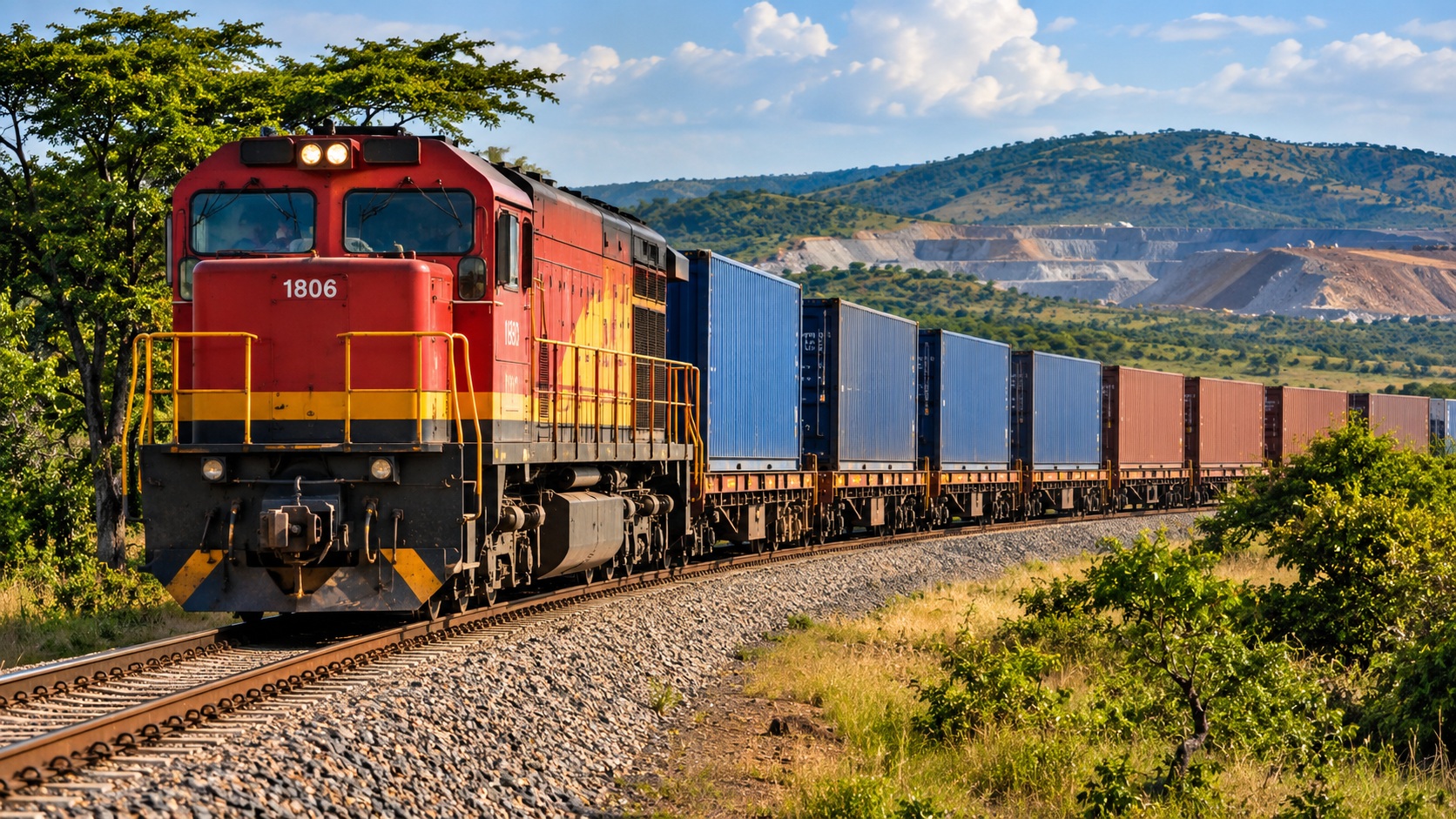
Africa's New Trade Corridors: Who Will Build the Industries Along Them?
🌍 You’re reading Africa’s innovation network
EcoTech is a growing space for farmers, innovators, scientists, investors and contributors building practical sustainability solutions.
Africa in the Making — From Resources to Participation | Part 3
Africa is preparing to connect more of its economies through new railways, modernised transport corridors and regional trade agreements.
On 27 October, Africa Finance Corporation announced preferred construction bidders for the proposed 830-kilometre railway connecting Zambia with Angola's Atlantic transport network.
Three days later, Tanzania and Angola announced plans to pursue connections between the continent's Atlantic and Indian Ocean transport corridors.
These developments raise an important question for Africa's economic future.
Will these corridors primarily carry Africa's resources to international markets, or will they also help create new industries within Africa?
A railway can move copper from a mining region to a port. But its economic potential extends much further.
The same transport infrastructure can connect agricultural producers to processing facilities, manufacturers to regional customers, engineering businesses to construction projects, and communities to emerging commercial opportunities.
The African Continental Free Trade Area provides a framework for expanding regional trade. Industrial development partnerships are increasingly examining how Africa can process more of its resources, manufacture more of its products and retain more of the value it creates.
Yet the development of infrastructure alone cannot guarantee these outcomes.
African businesses must become visible to one another. Skills and productive capabilities must be recognised. Researchers, suppliers and manufacturers must be able to identify opportunities and establish working relationships.
Africa's next development challenge is not simply connecting destinations. It is connecting capabilities.
The success of these major infrastructure investments should ultimately be assessed not only through freight volumes and export earnings, but also through the productive industries, enterprises and opportunities they help create.
Africa possesses the resources. It possesses people with knowledge, skills and entrepreneurial ambition.
The opportunity is to bring these capabilities together.
Because the true value of Africa's emerging trade corridors may be determined by what African people and businesses build along them.
Africa's future can not be measured by what it sends away alone, but also by what it learns to produce, connect and build for itself.
This Story Is Just the Beginning.
Discover the countries, industries and opportunities connected to what you have just read. Explore freely, and participate when you are ready.





Comments (0)
Join the Conversation
What do you think about this story? Share your view, a practical example, or a respectful challenge.
Comments are part of the EcoTech participation layer. Join from R49 once-off to participate, or log in if you already have an account.