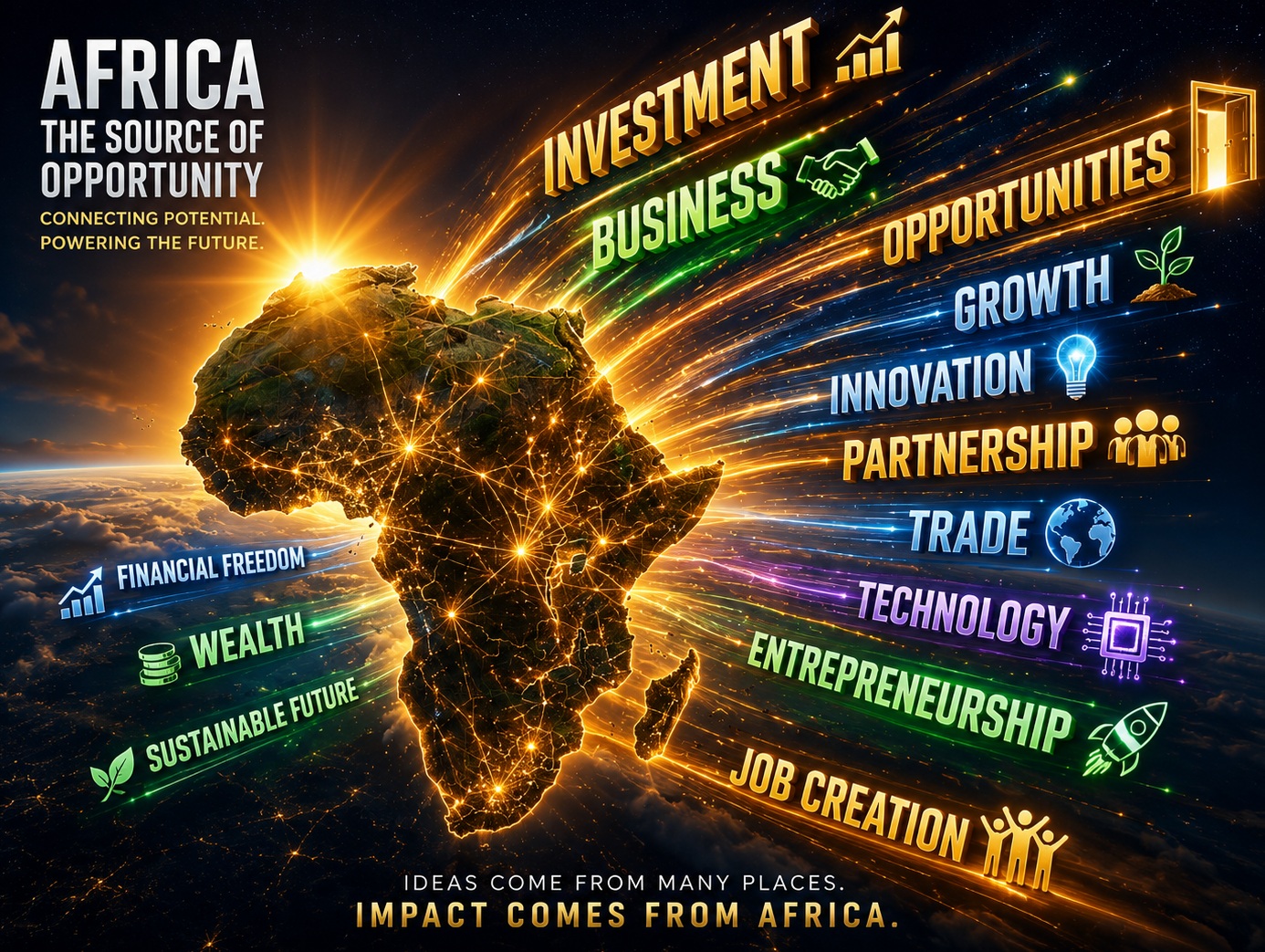
Build. Finish. Stabilize. Then Grow.
🌍 You’re reading Africa’s innovation network
EcoTech is a growing space for farmers, innovators, scientists, investors and contributors building practical sustainability solutions.
🌍 Volunteer to Build Africa's Living Knowledge Ecosystem
We are inviting individuals, businesses, researchers, students, professionals and organisations to participate in building Africa's connected knowledge ecosystem. Whether you want to contribute your expertise, collaborate on projects, support community initiatives or explore new opportunities, EcoTech provides a trusted platform to connect people with meaningful work and lasting impact.
View Participation PathwayThere is no shortage of ideas in Africa.
Every day, new concepts are presented, new startups are launched, new technologies are announced, and new promises are made. Conference rooms fill with presentations. Whiteboards fill with diagrams. Social media fills with ambition.
Yet, years later, many of those ideas have quietly disappeared.
Not because they were bad ideas.
Because they were never finished.
The Difference Between an Idea and an Institution
An idea is exciting.
An institution is dependable.
Ideas inspire people. Institutions serve people.
Africa has produced remarkable thinkers, entrepreneurs, engineers, researchers, farmers, educators, and innovators. Our challenge has never been creativity. Our challenge has been turning creativity into systems that endure.
Every unfinished project represents lost time, lost trust, and lost opportunity.
Communities begin to believe that "nothing ever gets completed."
That belief is one of the greatest barriers to innovation.
Building Is Only the Beginning
The first stage is always exciting.
Building is where imagination becomes visible.
It is where sketches become software, conversations become companies, and vision begins to take shape.
People celebrate launches.
They celebrate announcements.
They celebrate prototypes.
But building is only the first chapter.
Finish What You Started
Finishing is where discipline replaces excitement.
It means correcting the small errors that nobody notices.
It means documenting processes.
It means fixing security.
It means testing every button.
It means asking uncomfortable questions:
"Does this actually work?"
"Will this still work next year?"
"Can someone else understand it without me?"
Many projects fail not because they cannot be built—but because nobody commits to finishing them.
Stability Creates Trust
A finished product still has one more test.
Can people rely on it?
Stability is earned through consistency.
Users begin trusting a system when it behaves the same way every day.
Businesses begin investing when they know the platform will still be there tomorrow.
Governments begin collaborating when systems demonstrate maturity rather than promises.
Trust is built quietly.
One successful interaction at a time.
Growth Is the Reward, Not the Goal
Many organisations chase growth before they have earned stability.
They expand too quickly.
They add more features before completing the existing ones.
They seek more users before serving the current ones well.
Real growth is different.
Growth is what happens when people recommend something because it works.
When organisations renew because they received value.
When communities participate because they trust the platform.
Growth should never be forced.
It should be deserved.
A Lesson From EcoTech
Over the past year, we have lived this principle.
We did not begin by trying to build every feature imaginable.
Instead, we focused on foundations.
Identity.
Relationships.
Businesses.
Publishing.
Verification.
Enterprise.
Commercial systems.
Intelligence.
Each engine was built.
Then completed.
Then connected.
Then refined.
Only after those foundations became stable did it become possible to think about continental partnerships, governance structures, and long-term growth.
Without the foundation, those conversations would simply be ideas.
With the foundation, they become achievable plans.
Africa Needs More Finishers
The future of our continent will not be determined only by those who imagine.
It will also be determined by those who complete.
Those who stay with the project after the excitement fades.
Those who improve the details.
Those who document.
Those who test.
Those who fix.
Those who remain committed until the work can stand on its own.
Innovation is not measured by how many ideas we begin.
It is measured by how many institutions we leave behind.
The Principle
If there is one lesson worth carrying into every project, every company, every research programme, and every public institution, it is this:
Build. Finish. Stabilize. Then Grow.Not because growth is unimportant.
But because lasting growth belongs to work that has first been built with purpose, finished with discipline, and stabilised through trust.
Only then does growth become sustainable.
Only then does an idea become an institution.
Only then does innovation begin to change lives.
🚀 Volunteer to Build Africa's Living Knowledge Ecosystem
We are inviting individuals, businesses, researchers, students, professionals and organisations to participate in building Africa's connected knowledge ecosystem. Whether you want to contribute your expertise, collaborate on projects, support community initiatives or explore new opportunities, EcoTech provides a trusted platform to connect people with meaningful work and lasting impact.
This pathway is linked directly to this published story. Browse EcoTech Opportunities to see this and other active participation pathways alongside CloudFeed opportunities.




Comments (0)
Join the Conversation
What do you think about this story? Share your view, a practical example, or a respectful challenge.
Comments are part of the EcoTech participation layer. Join from R49 once-off to participate, or log in if you already have an account.