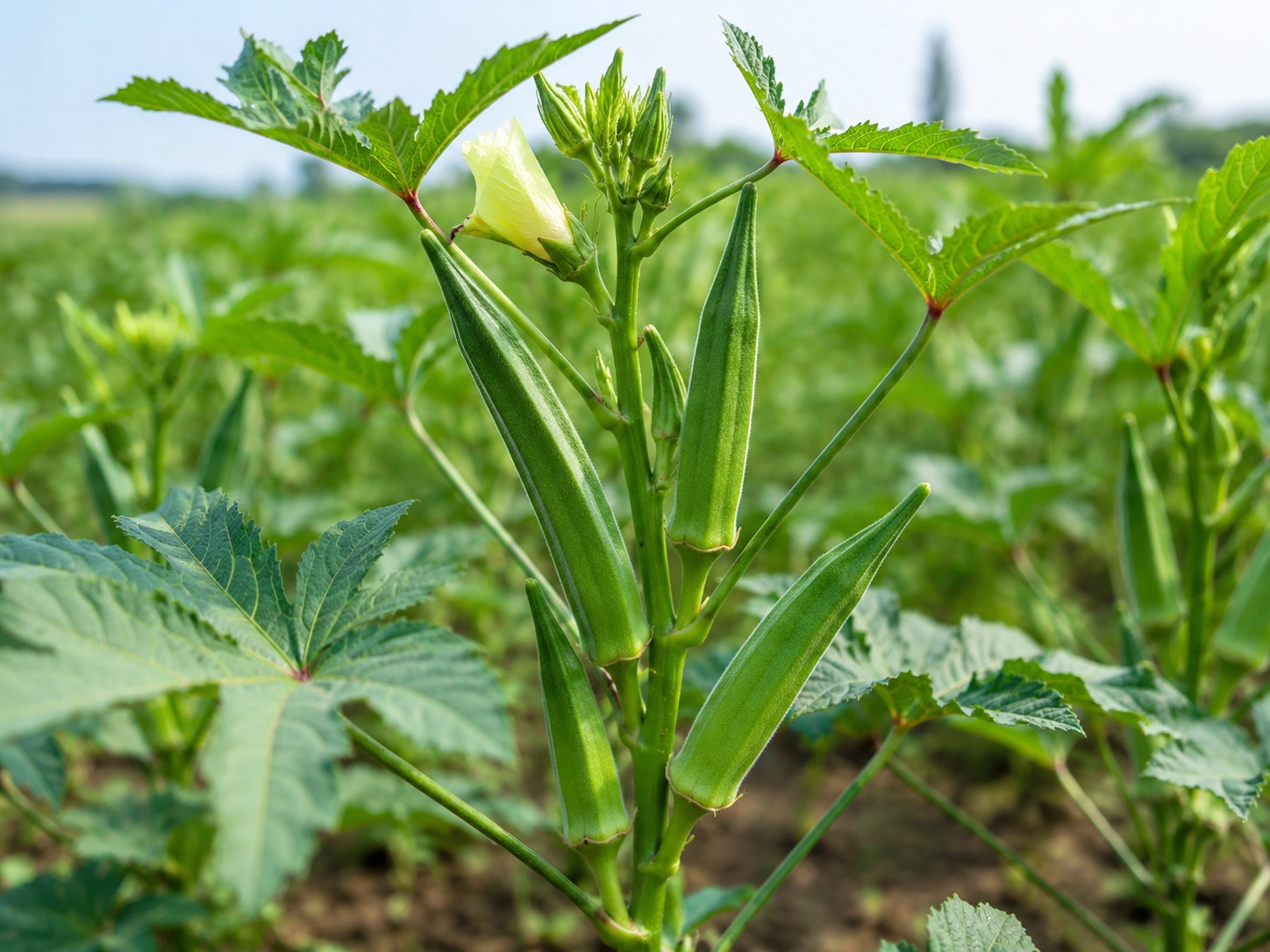
Five Cultivars, One Research Question: Which Okra Holds the Greatest Biotechnology Potential?
🌍 You’re reading Africa’s innovation network
EcoTech is a growing space for farmers, innovators, scientists, investors and contributors building practical sustainability solutions.
🌍 Contribute Expertise to the Okra Biotechnology Validation Pathway
EcoTech invites plant scientists, biotechnologists, bioprocessing specialists, laboratories, universities, formulation experts and agricultural researchers to contribute relevant knowledge and expertise as five okra cultivars move from controlled cultivation into characterisation, mucilage extraction and scientific validation.
View Participation PathwayBiotechnology often begins long before a laboratory result.
It begins with a biological resource, a research question and enough discipline to test whether the potential we see can actually be validated.
EcoDrop BioTech is currently preparing to grow five different okra cultivars as part of a research pathway focused on characterisation and the extraction of okra mucilage.
The purpose is not simply to grow okra.
The purpose is to understand whether different cultivars behave differently when they enter the research process — and whether one or more may ultimately prove better suited to the extraction and development pathway being investigated.
Why Five Cultivars?
Different cultivars of the same crop can vary in characteristics that may become important during scientific evaluation.
The research therefore needs suitable fresh plant material from each cultivar so that those differences can be examined rather than assumed.
The current pathway is straightforward:
Cultivar selection
* Controlled cultivation
* Fresh pod production
* Characterisation
* Mucilage extraction
* Comparison
* Extraction optimisation
* Formulation development
* Further validation
At this stage, the project is focused on growing the research material required to begin that comparison properly.
No final product claim is being made.
The purpose of the work is precisely to generate the evidence needed to determine what the material can do.
From Farm to Laboratory
This project also demonstrates something important about biotechnology development in Africa.
The laboratory cannot work in isolation from agriculture.
Researchers need reliable, traceable biological material.
That means cultivation conditions, cultivar identity, harvesting, quantity, handling and delivery all become part of the research pathway.
For this project, the cultivation work is being prepared specifically to supply fresh pods for scientific characterisation and extraction studies.
The research team has indicated a requirement of approximately 8 kg of fresh pods per cultivar, creating a direct connection between field production and laboratory investigation.
The Research Question
The central question is not:
“Does okra have value?”
The research question is more disciplined:
Which characteristics of these cultivars are most suitable for the extraction pathway being investigated, and how can that extraction be optimised and validated?
Only research can answer that.
And once the material has been characterised and extraction methods compared, the work can move further toward formulation, repeat analysis and possible future applications.
Why This Matters for African Biotechnology
Africa contains an enormous diversity of crops, plants, biological materials and traditional knowledge.
But biological potential only becomes scientifically useful when it can move through a credible validation pathway.
That requires farmers, researchers, laboratories, universities, biotechnology specialists, product developers and technology institutions to work together.
The opportunity is bigger than one crop.
It raises a wider biotechnology question:
How many African biological resources have promising characteristics but have never been systematically cultivated, characterised, extracted, compared and validated?
An Open Invitation to the Biotechnology Community
EcoTech invites plant scientists, biotechnologists, bioprocessing specialists, agricultural researchers, food scientists, formulation experts, universities, laboratories and technology-development organisations to engage with this work and the broader subject.
Relevant expertise may include:
- cultivar characterisation,
- plant mucilage research,
- extraction technologies,
- bioprocess optimisation,
- formulation development,
- agricultural production,
- analytical testing,
- natural materials,
- and biotechnology commercialisation pathways.
The project is still in the research journey.
That is precisely why participation matters now.
Follow the Validation Path
The next milestone is not a marketing claim.
It is producing the five cultivars successfully and delivering suitable research material so that the scientific work can proceed.
From there, the evidence will determine the direction.
Five cultivars.
One research question.
And a biotechnology pathway that begins in African soil before it reaches the laboratory.
🚀 Contribute Expertise to the Okra Biotechnology Validation Pathway
EcoTech invites plant scientists, biotechnologists, bioprocessing specialists, laboratories, universities, formulation experts and agricultural researchers to contribute relevant knowledge and expertise as five okra cultivars move from controlled cultivation into characterisation, mucilage extraction and scientific validation.
This pathway is linked directly to this published story. Browse EcoTech Opportunities to see this and other active participation pathways alongside CloudFeed opportunities.
Comments (0)
Join the Conversation
What do you think about this story? Share your view, a practical example, or a respectful challenge.
Comments are part of the EcoTech participation layer. Join from R49 once-off to participate, or log in if you already have an account.