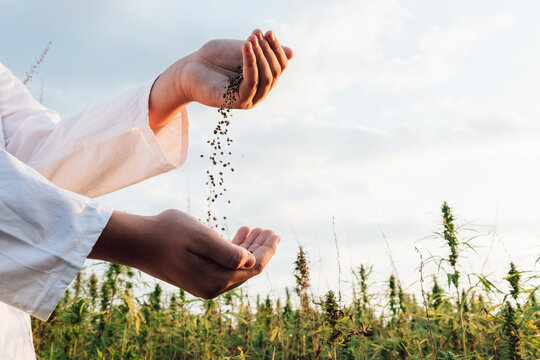
Hemp Seed Availability for Farmers in South Africa
🌍 You’re reading Africa’s innovation network
EcoTech is a growing space for farmers, innovators, scientists, investors and contributors building practical sustainability solutions.
As interest in hemp cultivation grows across South Africa, one of the most important practical questions for farmers is simple: Where do we get reliable hemp seed?
Seed availability is one of the key factors determining how quickly the hemp sector can expand. While the industry has made progress in recent years, access to certified seed varieties remains one of the main challenges facing farmers who want to plant hemp at scale.
Hemp is not a single universal crop. Different varieties are bred for different purposes, including:
- Fibre production
- Seed and food products
- Cannabinoid extraction
- Dual-purpose crops
Selecting the correct variety is important because each variety has different characteristics such as:
- plant height
- flowering cycle
- seed yield
- fibre quality
- THC compliance levels
For regulatory reasons, hemp varieties must also meet strict limits on THC content to qualify as legal industrial hemp.
At present, farmers in South Africa typically obtain hemp seed through a combination of:
- licensed importers
- research trials
- pilot cultivation programmes
- government-supported seed development initiatives
Some growers have relied on imported seed from international hemp-producing countries. However, importing seed can involve regulatory processes and may not always be suited to local climate conditions.
Because of this, there has been increasing focus on developing locally adapted hemp varieties.
The Agricultural Research Council (ARC) has been conducting research into hemp cultivation and seed development in South Africa.
These programmes aim to:
- identify varieties suited to local climate conditions
- ensure compliance with THC regulations
- support the creation of a local seed multiplication system
Developing certified local seed varieties is an important step toward building a stable and scalable hemp industry.
Once seed multiplication programmes expand, farmers should have more consistent access to planting material suitable for South African growing conditions.
Despite the growing interest in hemp, several practical challenges remain when it comes to seed availability.
These include:
- limited access to certified seed varieties
- regulatory procedures for importing seed
- lack of large-scale local seed production
- limited farmer experience with hemp cultivation
As a result, many farmers are currently approaching hemp through small pilot plantings rather than large commercial acreage.
One of the interesting opportunities within the hemp industry is that seed production itself could become a new agricultural sector.
Seed multiplication farms may eventually play a critical role in supplying planting material to hemp growers across the country.
If the industry continues to develop, seed production could become a specialised agricultural activity supporting fibre, food, and industrial hemp markets.
The availability of reliable hemp seed will be one of the key factors shaping the growth of the hemp sector in South Africa.
As research programmes expand and regulatory frameworks mature, farmers are likely to gain improved access to certified varieties suited to local conditions.
For growers interested in exploring hemp cultivation, staying informed about seed developments and research trials will be essential.
While the industry is still developing, the increasing focus on seed research and multiplication suggests that the foundations for a local hemp seed system are gradually being built.


Comments (0)
Join the Conversation
What do you think about this story? Share your view, a practical example, or a respectful challenge.
Comments are part of the EcoTech participation layer. Join from R49 once-off to participate, or log in if you already have an account.