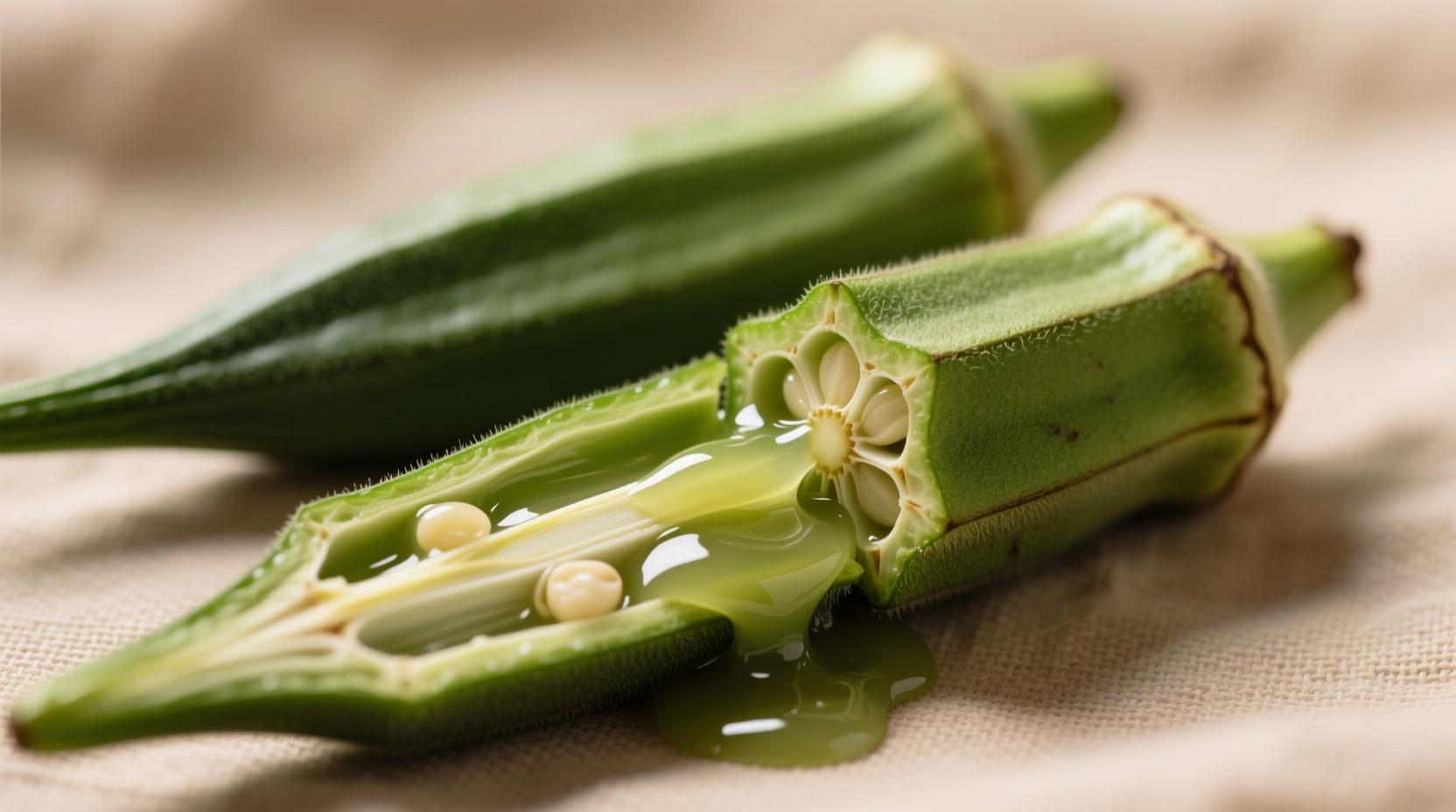
Nature vs Plastic: How Okra Could Transform Water Purification
🌍 You’re reading Africa’s innovation network
EcoTech is a growing space for farmers, innovators, scientists, investors and contributors building practical sustainability solutions.
A Breakthrough Hidden in Plain Sight from South Africa
Recent studies show that natural plant polymers, particularly those derived from okra, can effectively remove microplastics from water through a process known as flocculation. These sticky, biodegradable compounds bind to microscopic plastic particles, forming larger clusters that can be easily separated from water.
This discovery is not just a scientific curiosity, it represents a fundamental shift in how we approach water purification.
The Invisible Threat
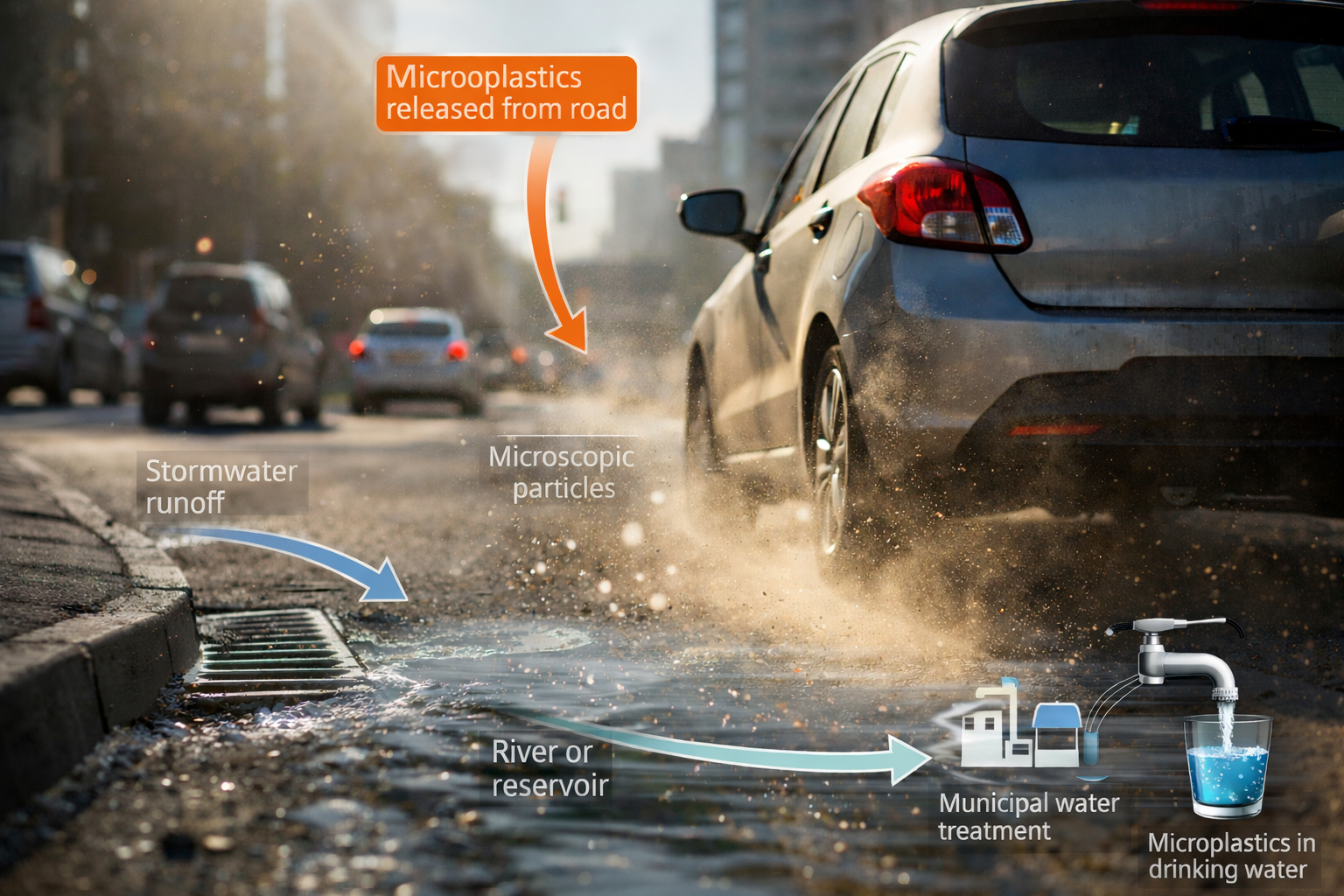
Microplastics, tiny fragments of degraded plastic, are now present in:
- Drinking water systems
- Rivers and reservoirs
- Even bottled water
Traditional treatment methods struggle to capture these particles due to their size and chemical diversity.
Why Okra Works
Okra contains natural polysaccharides, long-chain molecules that:
- attract suspended particles
- bind contaminants together
- enable natural sedimentation
Unlike synthetic chemicals such as polyacrylamide, these plant-based solutions:
- do not introduce toxic residues
- are biodegradable
- can be sustainably produced at scale
From Research to Real-World Impact
Laboratory studies have demonstrated that okra-based extracts can:
- capture different types of plastics (e.g. polyethylene, polystyrene)
- function in varied water conditions
- remain effective even in high-turbidity environments
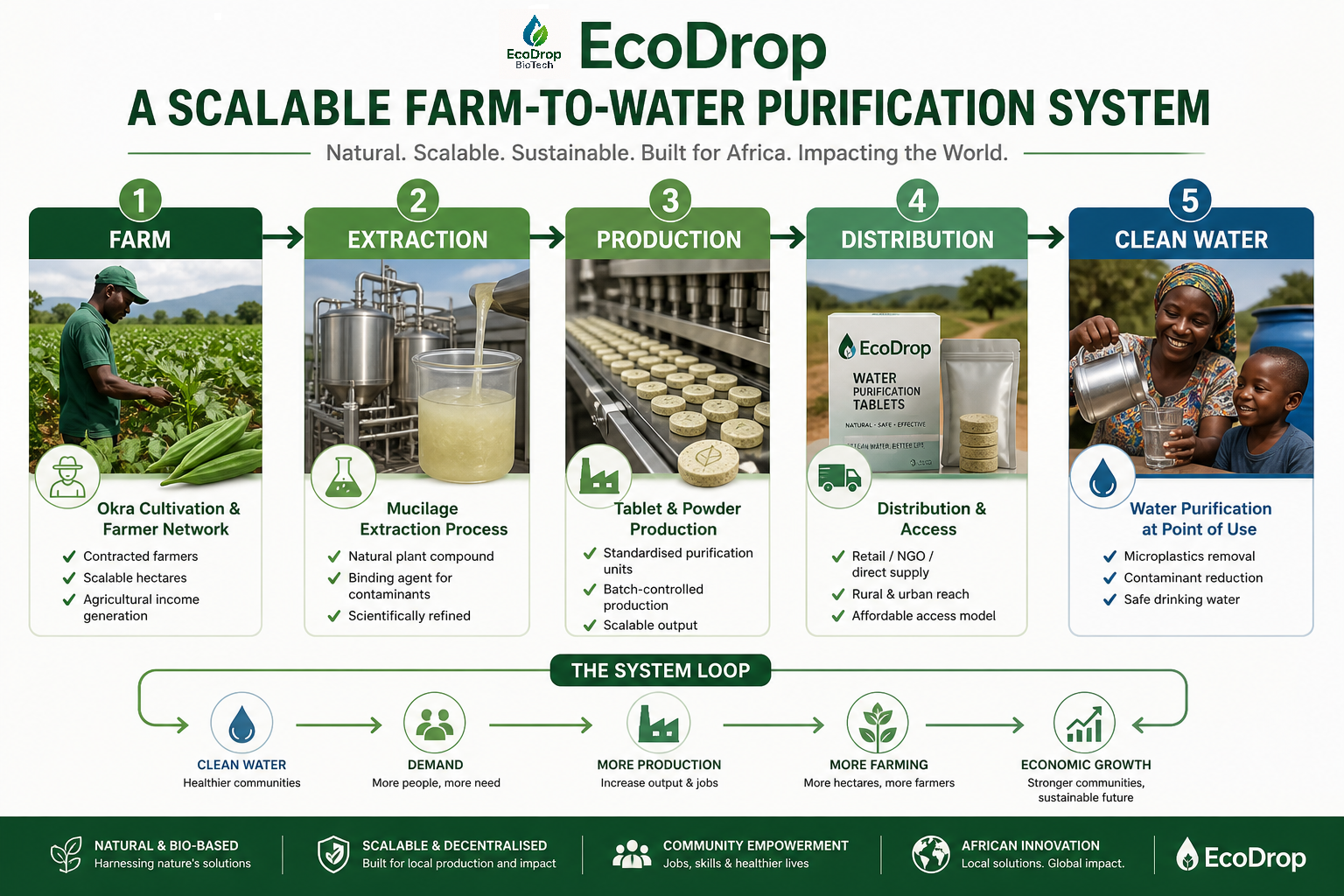
This opens the door to scalable, low-cost water purification systems, particularly important for developing regions.
The African Opportunity
Africa sits at the intersection of:
- water scarcity
- agricultural potential
- rising plastic pollution
By leveraging locally grown crops like okra, there is an opportunity to:
- build decentralized purification systems
- empower farmers through new value chains
- reduce dependence on imported chemical treatments
Bridging Science and Application
While research continues to evolve, the transition from laboratory validation to real-world deployment is already underway.
Emerging systems are beginning to integrate:
- plant-based flocculants
- simple filtration mechanisms
- scalable distribution models
The focus now is not whether this works, but how fast it can be implemented.
A Natural Future for Clean Water
The idea that a common vegetable could help solve one of the world’s most pressing environmental challenges may seem surprising.
But it highlights a deeper truth:
The solutions to modern problems may already exist in nature, we just need to apply them correctly.
As research advances and implementation accelerates, plant-based water purification could become a cornerstone of global water security.
And in that future, something as simple as okra may play a critical role in protecting human health and the environment.



Comments (0)
Join the Conversation
What do you think about this story? Share your view, a practical example, or a respectful challenge.
Comments are part of the EcoTech participation layer. Join from R49 once-off to participate, or log in if you already have an account.