The AI Storm in Africa: Intelligence Is Scaling Faster Than Connectivity
🌍 You’re reading Africa’s innovation network
EcoTech is a growing space for farmers, innovators, scientists, investors and contributors building practical sustainability solutions.
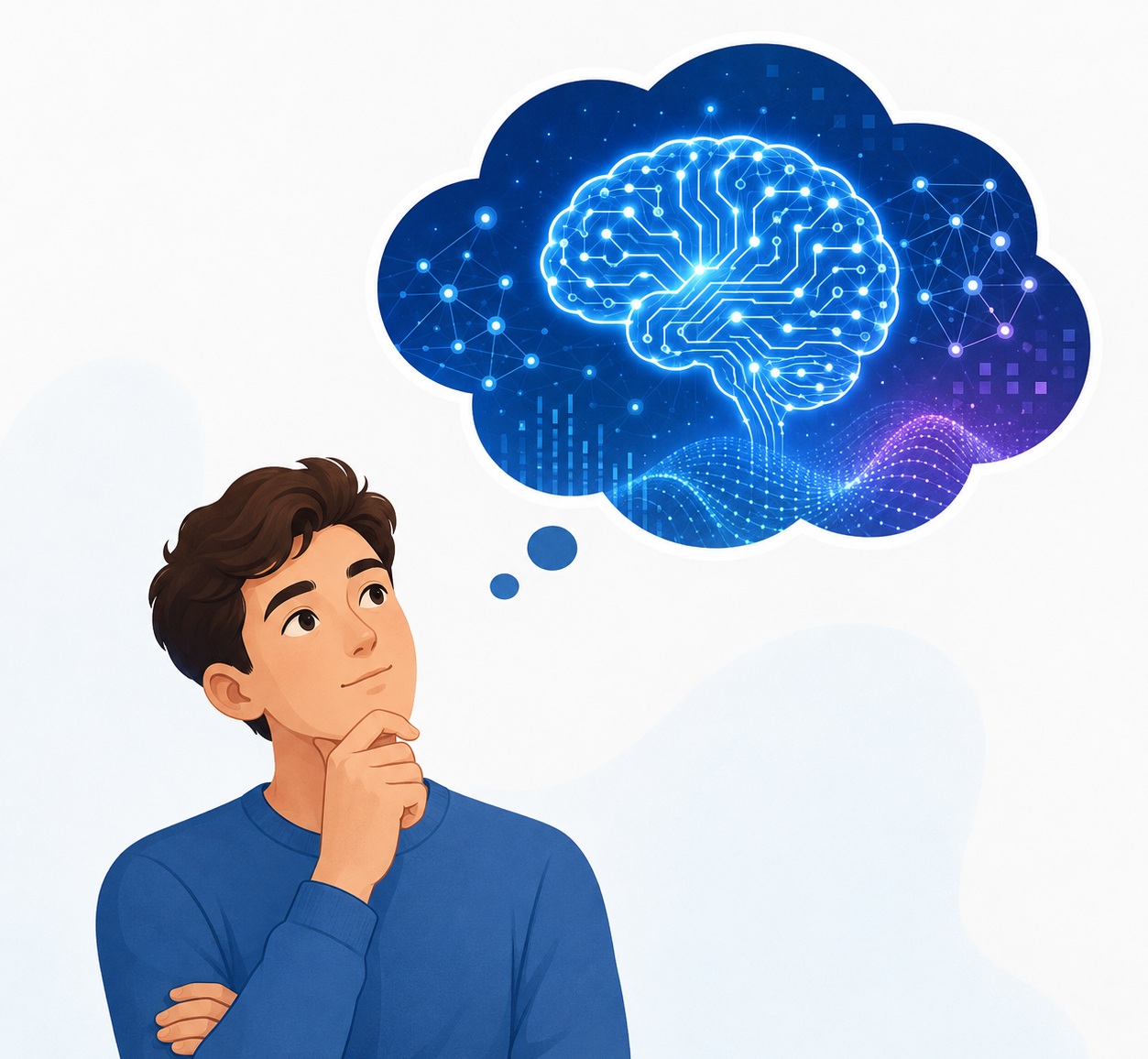
Africa is entering an AI storm.
Artificial intelligence is moving rapidly across the continent through new data centres, cloud infrastructure, software platforms, automation, robotics, research programmes, policy initiatives and international investment.
The conversation is increasingly dominated by speed.
Who will build the next data centre?
Who controls the computing power?
Who owns the cloud?
Who has access to the GPUs?
Who develops the models?
Who attracts the investment?
Who controls the data?
And somewhere underneath all of that is a question Africa may need to ask much more openly:
Is the rapid push of artificial intelligence into Africa being driven purely by development and innovation — or is there also a deeper power struggle underway over infrastructure, data, markets, influence and the future digital economy?
That question should not be dismissed as anti-technology or anti-investment.
It is precisely the kind of question a continent entering a new technological era should be asking.
Because there is another reality beneath the enthusiasm:
AI is moving faster than Africa is connecting.
Africa should embrace AI
There is enormous potential in artificial intelligence for Africa.
AI can contribute to agriculture, water management, logistics, healthcare, manufacturing, education, research, financial services, environmental monitoring, public administration and almost every other major sector of the economy.
Africa should be building AI.
Africa should be researching AI.
Africa should be attracting investment into AI.
Africa should build data centres.
Computing power matters.
Cloud infrastructure matters.
Robotics matters.
Software matters.
Reliable electricity matters.
Connectivity matters.
There is no contradiction between wanting Africa to participate aggressively in artificial intelligence and simultaneously asking who controls the infrastructure beneath it.
In fact, those questions belong together.
The global AI infrastructure race is becoming extraordinarily capital-intensive. Current international investment is increasingly centred not only on software models but on GPUs, electricity, cooling systems, data centres and the financial structures required to fund enormous amounts of computing capacity. Recent reporting shows global data-centre investment forecasts reaching into the trillions of dollars before the end of this decade.
That tells us something important.
AI is not simply a software revolution.
It is becoming an infrastructure revolution.
And infrastructure has always been connected to power.
Is there a power struggle underneath the AI boom?
We should ask the uncomfortable question.
As global technology companies, governments, investment funds and infrastructure providers compete for computing capacity, data centres, cloud regions, energy, AI talent and digital markets, is Africa simply witnessing a new technological expansion?
Or are we also watching the early stages of a global struggle over who will control the infrastructure of the next economy?
There does not need to be a conspiracy for this to be true.
Competition itself creates the pressure.
Companies want markets.
Governments want strategic influence.
Investors want returns.
AI developers need data and computing power.
Data-centre operators need electricity, land, connectivity and customers.
Countries increasingly want greater control over where their data and computing infrastructure reside.
The economics are enormous.
Recent international deals show AI companies committing tens of billions of dollars simply to secure access to computing infrastructure.
Africa therefore needs to think beyond:
“How do we attract AI investment?”
We also need to ask:
“What position will Africa occupy once that infrastructure exists?”
Will we own parts of it?
Will African companies build on it?
Will our researchers have meaningful access to it?
Will African businesses become participants in the economic value created by it?
Will our data remain strategically useful to African institutions?
Will our young people merely consume AI tools?
Or will they build the systems that come next?
The connectivity underneath the intelligence
This is where the AI discussion becomes more complicated.
The International Telecommunication Union describes strong growth in African digital connectivity, including mobile broadband, submarine cables, Internet exchange points and emerging satellite technologies.
But it also continues to identify persistent problems with affordability, quality of service, infrastructure, skills and the urban-rural divide. Africa's geography makes terrestrial infrastructure particularly difficult to extend into remote areas.
That matters enormously.
Because AI assumes connectivity.
It assumes bandwidth.
It assumes electricity.
It assumes devices.
Increasingly, it assumes cloud access.
It assumes people can participate digitally on an ongoing basis.
But those conditions are not distributed evenly across Africa.
The ITU also continues to identify affordability as a significant barrier to meaningful connectivity, particularly for people in lower-income economies.
So when we speak about an African AI revolution, we should be careful about confusing availability of technology with ability to participate in that technology.
Those are two very different things.
A data centre does not automatically connect a farmer
A new data centre may be strategically important.
But it does not automatically connect a farmer.
A cloud region does not automatically make a rural enterprise visible.
A new AI model does not automatically connect an African researcher to the institution that needs their work.
A robotics laboratory does not automatically create access to capital for a young African engineer.
A digital-skills programme does not automatically create a market for the people who complete it.
And a technology conference does not automatically create long-term commercial relationships between the people who attend it.
The technology can exist while the ecosystem underneath it remains fragmented.
That is where Africa's connectivity problem becomes larger than telecommunications.
Connectivity is not only Internet connectivityWe often use the word connectivity to mean fibre, mobile networks, towers, satellites and Internet access.
All of those are essential.
But there is another layer.
Africa also needs:
economic connectivity
institutional connectivity
knowledge connectivity
enterprise connectivity
research connectivity
opportunity connectivity
trusted digital identity
and ultimately,
continental relationships.
Can a researcher in Uganda discover an organisation in Zambia working on the same problem?
Can a verified Malawi business participate confidently in an opportunity originating in South Africa?
Can an entrepreneur establish who they are and what organisation they are authorised to represent?
Can an investor find credible African projects outside the same established networks?
Can an African SME discover a manufacturing partner in another country?
Can institutions find one another before an international intermediary introduces them?
Can knowledge move between countries rather than disappearing into isolated social-media posts?
These are also connectivity problems.
And AI cannot solve them intelligently if the relationships themselves do not exist digitally.
Attention becomes capitalThere is another cycle worth examining.
Attention attracts capital.
Capital builds infrastructure.
Infrastructure attracts businesses.
Businesses attract talent.
Talent attracts more attention.
And the cycle repeats.
This is one reason the same large international companies naturally appear repeatedly in conversations about Africa's technological future.
Microsoft.
Google.
Amazon Web Services.
NVIDIA.
OpenAI.
International financial institutions.
Major global foundations.
Their participation can be enormously valuable.
Africa should work with global companies.
This is not an argument for technological isolation.
But Africa must understand the difference between:
global companies participating in Africa
and
African companies participating meaningfully in the global economy.
Those are not automatically the same thing.
If most of the capital, platforms, compute, intellectual property and distribution channels remain elsewhere, Africa can experience massive technological growth while still capturing a relatively small part of the value created by that growth.
That is the danger.
Where are the African builders?Africa does not lack ideas.
It does not lack intelligent people.
It does not lack entrepreneurs.
It does not lack researchers.
It does not lack engineers.
It does not lack farmers.
It does not lack institutions.
And it certainly does not lack ambition.
What many African builders lack is the same thing that established global organisations already possess:
visibility, capital, infrastructure, trusted networks and access to markets.
And those things reinforce one another.
If an organisation receives attention, it becomes easier to raise capital.
Once it raises capital, it can build infrastructure.
Once it builds infrastructure, it becomes more visible.
Then capital becomes easier to raise again.
Meanwhile, an African organisation doing meaningful work can spend years trying simply to become visible enough to enter the same conversation.
That is not merely a technology problem.
It is a structural problem.
Education should create builders, not boundariesEducation will obviously play a major role in Africa's AI future.
But perhaps we also need to think differently about what education is supposed to produce.
Education should provide knowledge.
It should teach history.
Science.
Engineering.
Mathematics.
Technology.
Economics.
Politics.
But education should not teach young Africans that everything important has already been worked out for them.
The purpose should not simply be:
Learn what we already know.
It should also be:
Question it.
Test it.
Improve it.
Build beyond it.
Because AI will increasingly perform many forms of routine knowledge retrieval faster than people can.
What becomes more valuable is the human ability to question, reason, connect ideas, imagine alternatives and build things that do not yet exist.
So perhaps one of the most important principles for Africa's next generation is this:
Education should not only teach young Africans what is already known. It should equip them to question it, improve it and build what does not yet exist.Africa does not need generations trained only to operate imported systems.
It needs generations confident enough to build new ones.
Who owns Africa's digital future?This may become one of the defining questions of the coming decade.
Not:
Will Africa use artificial intelligence?
Of course it will.
But:
Who will own the infrastructure?
Who will own the companies?
Who will own the relationships?
Who will control the data?
Who will finance the next generation of African platforms?
Who will determine which African businesses become visible?
Who will connect African researchers to opportunities?
Who will determine which ideas receive investment?
And perhaps most importantly:
Will Africa build enough of its own infrastructure to negotiate from a position of participation rather than dependence?
The ITU's own broadband work increasingly treats meaningful connectivity as much more than simply network coverage. Its work highlights affordability, digital identity, skills, infrastructure, inclusion and cross-sector collaboration as necessary components of meaningful digital participation.
That is an important distinction.
Being connected to the Internet is not the same as being connected to the economy.
Africa needs another kind of infrastructureWhen people speak about AI infrastructure, they generally mean:
chips,
GPUs,
servers,
electricity,
data centres,
cloud infrastructure,
fibre,
and telecommunications.
All of those are essential.
But Africa needs another infrastructure layer alongside them:
Identity.
Trust.
Enterprise.
Relationships.
Knowledge.
Opportunity.
Participation.
Because technology only becomes economically meaningful when people and organisations can use it to do something.
A business needs an identity.
An individual needs an identity.
An organisation needs authority.
A researcher needs discoverability.
An opportunity needs an audience.
A transaction needs trust.
And intelligence needs context.
This is where EcoTech sees the gapThis is one of the reasons we are building EcoTech Africa.
EcoTech is not trying to become another global AI laboratory.
We are not attempting to compete with hyperscale cloud providers.
We are not pretending to be a continental telecommunications network.
The problem we are trying to address sits between those layers.
We are asking:
How do African people find one another?
How do businesses establish verified identities?
How does an individual establish a trusted identity that can follow them through the ecosystem?
How do organisations establish who is authorised to act on their behalf?
How do businesses connect across countries?
How does African knowledge become discoverable?
How do opportunities find the people who are actually relevant to them?
How do individuals and enterprises operate digitally using documents, publishing, invoicing and trusted relationships?
And ultimately:
How can artificial intelligence reason across those relationships?
That is where EcoTech's intelligence layer, Echo, becomes relevant.
AI becomes more useful when it understands contextMost artificial intelligence today begins with a prompt.
Someone asks a question.
The AI produces an answer.
But imagine intelligence operating within a trusted African ecosystem.
It could understand:
who the person is,
what industries matter to them,
which businesses they are authorised to represent,
which relationships they have,
what countries they operate in,
what opportunities may be relevant,
which documents they are authorised to access,
what activity has taken place previously,
and what knowledge already exists within the ecosystem.
That is a completely different form of intelligence.
But AI cannot create those relationships from nothing.
The underlying ecosystem must exist first.
Before intelligence can understand Africa's relationships, Africa's relationships must become connected.
Africa should welcome global partners — but not disappear behind themAfrica should continue working with the world's largest technology companies.
We need their infrastructure.
We need collaboration.
We need investment.
We need research partnerships.
We need access to global markets.
But African participation should not become invisible behind global brands.
Africa must recognise African companies.
African institutions.
African researchers.
African entrepreneurs.
African investors.
African engineers.
African organisations.
African leadership.
Global partnerships should strengthen African capability — not become a substitute for it.
The goal should not be to shut the world out.
The goal should be to ensure that when the world comes in, Africa is standing there with something of its own.
The AI storm is already hereThe AI storm is not coming.
It is already here.
The money is moving.
The data centres are being planned.
The GPUs are being bought.
The models are becoming more powerful.
The infrastructure race is accelerating.
The global financial system is beginning to structure itself around access to computing capacity.
Africa now has a choice.
We can experience this revolution primarily as a collection of markets connected individually to infrastructure built elsewhere.
Or we can deliberately build the relationships, enterprises, knowledge systems, infrastructure and institutions that allow Africa to participate as a connected continent.
That will require investment.
It will require courage.
It will require governments.
It will require private companies.
It will require researchers.
It will require entrepreneurs.
It will require African institutions.
And it will require global partners.
But the objective should remain clear:
Africa must not merely become connected to the AI economy.
Africa must become connected to itself.
Because the most powerful artificial intelligence in the world will mean very little to an African entrepreneur, farmer, researcher or business that remains invisible, disconnected and unable to participate.
Artificial intelligence may become one of the defining technologies of our generation.
But beneath the AI revolution sits a much older challenge.
Connection.
And perhaps the most important infrastructure Africa builds over the next decade will not only be the infrastructure that makes machines more intelligent.
It will be the infrastructure that allows Africans to find, trust, connect and build with one another.
EcoTech Perspective
At EcoTech Africa, we believe Africa's technological future cannot be measured only by how much global technology arrives on the continent.
It should also be measured by how effectively African people, businesses, researchers, institutions, industries, knowledge and opportunities become connected to one another.
We welcome the AI revolution.
We welcome global participation.
We welcome investment.
But Africa must also build.
Africa must own.
Africa must connect.
And Africa must participate in shaping what comes next.




Comments (0)
Join the Conversation
What do you think about this story? Share your view, a practical example, or a respectful challenge.
Comments are part of the EcoTech participation layer. Join from R49 once-off to participate, or log in if you already have an account.