
The Current Status of the Hemp Industry in South Africa
🌍 You’re reading Africa’s innovation network
EcoTech is a growing space for farmers, innovators, scientists, investors and contributors building practical sustainability solutions.
Introduction
Over the past few years, hemp has moved from being a restricted crop to becoming one of the most discussed agricultural opportunities in South Africa. Farmers, entrepreneurs, researchers, and policymakers are all exploring the role hemp could play in rural development, sustainable materials, food production, and green industry.
While the sector is still developing, significant progress has been made through government policy changes, pilot projects, and increasing private sector interest.
Policy and Regulatory Environment
The South African government has recognised hemp as a strategic agricultural and industrial crop. The National Cannabis Master Plan, released in recent years, aims to position South Africa as a global leader in cannabis and hemp production.
Key goals of the plan include:
- expanding rural cultivation opportunities
- creating jobs across the cannabis value chain
- developing local processing and manufacturing industries
- supporting research and seed development
Hemp cultivation is allowed under regulated conditions, and the crop is defined as cannabis containing very low levels of THC (the psychoactive compound). Farmers who wish to grow hemp must currently obtain permits and comply with regulatory requirements.
Although progress has been made, the regulatory framework is still evolving as government works to balance agricultural development with public health and law-enforcement considerations.
Growing Farmer Interest
Interest from farmers has increased steadily across the country. Hemp offers several potential advantages for agriculture:
- relatively fast growth cycles
- multiple product markets
- suitability for crop rotation
- potential for use in sustainable farming systems
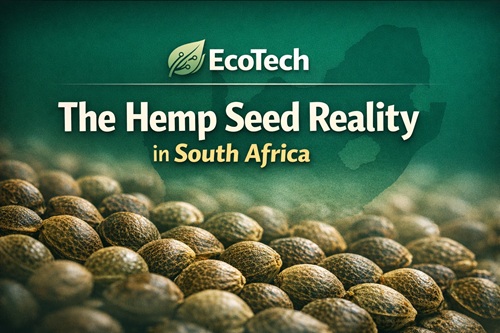
Farmers are exploring hemp not only for fibre but also for hemp seed production, which can be used in food products, oils, and animal feed.
However, many farmers are still waiting for clearer regulatory pathways and more consistent access to certified seed before expanding cultivation at scale.
Seed Availability and Research
One of the most important factors for the growth of the hemp sector is the availability of locally adapted seed varieties.
Research institutions such as the Agricultural Research Council (ARC) have been working on hemp trials and seed development programmes to identify varieties suitable for South African conditions.
Developing certified seed supply systems will be essential for the long-term growth of the industry. Reliable seed access allows farmers to plan planting schedules, ensures compliance with THC limits, and supports consistent crop performance.
As seed multiplication programmes expand, more farmers are expected to gain access to viable planting material.
Industrial Opportunities
Beyond agriculture, hemp presents opportunities across multiple industries.
Possible value chains include:
- textiles and fibre products
- construction materials such as hempcrete
- bioplastics and sustainable packaging
- food products made from hemp seed
- cosmetics and wellness products
These industries align with global trends toward sustainable materials and plant-based products.
For South Africa, hemp could contribute to both green manufacturing and rural economic development.
Challenges Facing the Industry
Despite the enthusiasm around hemp, several challenges remain:
- regulatory clarity is still developing
- seed availability is limited
- processing infrastructure is still emerging
- farmers require more training and extension support
Addressing these issues will be critical for scaling the sector.
Many stakeholders believe that collaboration between government, researchers, farmers, and private companies will be key to unlocking the full potential of the hemp economy.
Looking Ahead
The hemp industry in South Africa is still in its early stages, but the foundations are being laid for future growth. Policy development, research programmes, and increasing private investment are all contributing to the gradual expansion of the sector.
If regulatory frameworks continue to evolve and seed supply improves, hemp could become a valuable addition to South Africa’s agricultural landscape.
For farmers and innovators interested in sustainable crops and new agricultural markets, hemp remains an industry worth watching.



Comments (0)
Join the Conversation
What do you think about this story? Share your view, a practical example, or a respectful challenge.
Comments are part of the EcoTech participation layer. Join from R49 once-off to participate, or log in if you already have an account.