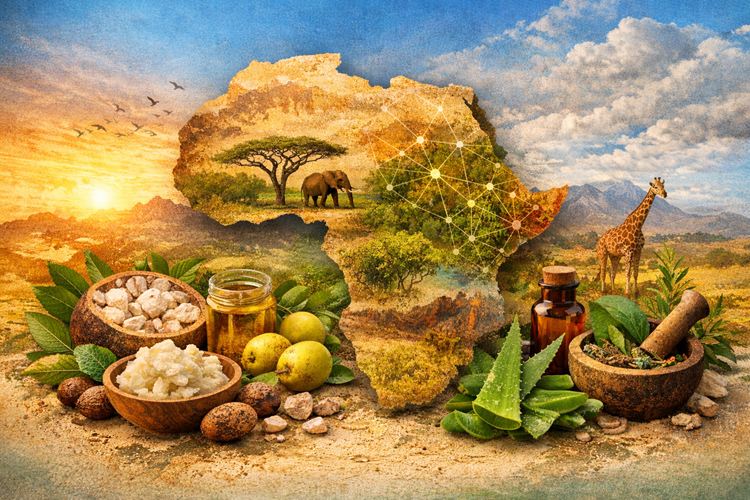
Africa’s Biodiversity: The Industry You Already Use Every Day
🌍 You’re reading Africa’s innovation network
EcoTech is a growing space for farmers, innovators, scientists, investors and contributors building practical sustainability solutions.
You are already part of the biodiversity industry
Every day, without thinking about it, you already use biodiversity.
The oil on your skin.
The plants in your food.
The ingredients in your medicine.
Biodiversity is simply the natural materials around us; plants, seeds, oils, and ecosystems, that we turn into products we use daily.
The real question is:
Who is benefiting from Africa’s biodiversity — and who should be?
What biodiversity actually means (in real terms)
Biodiversity is not just a scientific concept, it is your daily life.
It includes:
- the crops grown by farmers
- the plants used in traditional medicine
- the natural oils used in cosmetics
- the ecosystems that support water and food systems
At its core, biodiversity is:
- the living foundation of our economies, health systems, and industries
The products you already know
Across Africa, biodiversity-based products are already part of real industries:
- Baobab – used in powders, drinks, and nutrition
- Marula – used in oils, cosmetics, and export products
- Shea Butter – widely used in skincare and beauty
- Indigenous herbs and plants – used daily in health and wellness
These are not future ideas, these are existing economic systems.
The problem: Africa exports raw value
Here is the reality:
Africa often exports raw biodiversity…
and imports finished products at a higher value.
That means:
- The resource comes from Africa
- The processing happens elsewhere
- The value is captured outside the continent
This is not just a trade issue, it is a missed industrial opportunity.
The opportunity:
Build value where it starts.
The future of Africa’s biodiversity industry is not just in harvesting, it is in processing, innovation, and ownership.
What if?:
- farmers were linked to production systems
- local processing became standard
- products were developed within African markets
- knowledge and innovation stayed close to source
This is where biodiversity shifts from being a resource to becoming an industry.
Why this matters now
Africa is already moving toward:
- green economies
- sustainable production
- local manufacturing
- bio-based innovation
Biodiversity sits at the centre of all of this.
It connects:
- agriculture
- water systems
- health
- manufacturing
- and environmental sustainability
This is where your voice matters
There is no single African biodiversity story. There are country-level realities and they matter.
What works in South Africa may look different in:
- the DRC
- Kenya
- Ghana
- Nigeria
- Zambia
- or anywhere else across the continent
That is why participation matters.
Platforms like EcoTech are not just for publishing, they are for connecting real perspectives across Africa.
This article was developed with AI-assisted research and editorial support through the EcoTech platform.
Comments (1)
Join the Conversation
What do you think about this story? Share your view, a practical example, or a respectful challenge.
Comments are part of the EcoTech participation layer. Join from R49 once-off to participate, or log in if you already have an account.
This is where crops like okra, hemp, and castor become important.
• Okra has value beyond food, especially through mucilage applications linked to water purification and bio-based processing.
• Hemp offers strong potential across fibre, seed, biomass, and industrial product development.
• Castor creates opportunities in oil production, industrial inputs, and farmer-linked cultivation systems.
The real opportunity is not just to grow these crops, but to build systems around them.
If farmers are properly linked into platforms like EcoDrop, they do not only become raw material suppliers. They become part of a wider process that can include:
• cultivation planning
• traceable supply
• processing
• product development
• local manufacturing
• and market participation
That is where biodiversity starts becoming an industry.
The question is not only what Africa can grow, it is what Africa can build from what it grows.
Follow-up question for participants:
In your country, which crops or natural resources could move into stronger value chains if farmers, processors, and innovators were better connected?