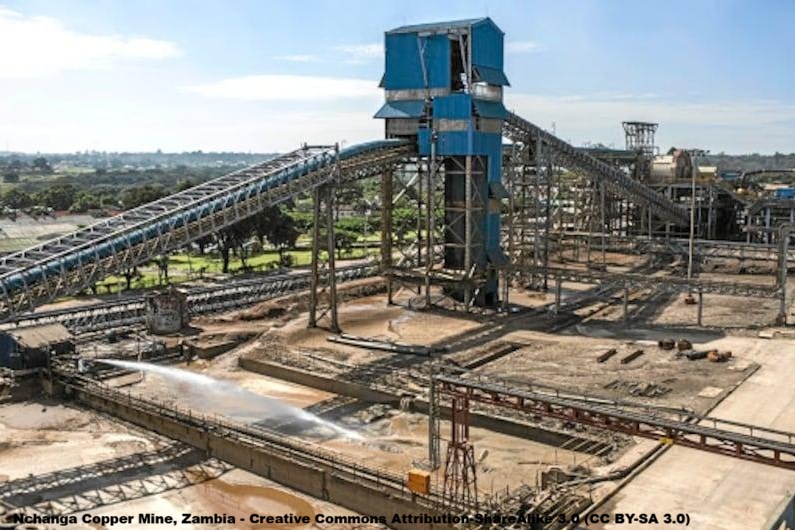
Africa's Minerals: Who Creates the Wealth?
🌍 You’re reading Africa’s innovation network
EcoTech is a growing space for farmers, innovators, scientists, investors and contributors building practical sustainability solutions.
Africa in the Making | Part 1: The Resources
As global demand for Africa's critical minerals intensifies, a fundamental economic question is emerging: will the continent remain primarily a supplier of raw materials, or will it capture more of the industrial value its resources make possible?
A warning against a new scramble for Africa
On 27 October 2026, South Africa's Minister of International Relations and Cooperation, Ronald Lamola, warned that growing international competition for Africa's critical minerals could reproduce longstanding economic inequalities.
Speaking at the Second Global Africa and African Diaspora Conference in Ekurhuleni, Lamola called attention to a historical pattern in which African resources helped fuel industrial development elsewhere while many resource-producing communities received limited economic benefits.
His warning comes as minerals including cobalt, copper, lithium, manganese and platinum play increasingly important roles in global manufacturing, energy infrastructure, electric vehicles and advanced technologies.
The opportunity for Africa is considerable. But so is the challenge.
Possessing valuable resources does not automatically mean controlling the wealth generated from them.
That distinction lies at the heart of Africa's industrialisation debate.
Africa's place in the global mineral economy
The Democratic Republic of the Congo is central to global cobalt production and a major copper producer. South Africa possesses extensive platinum-group-metal and manganese resources, while countries including Zimbabwe, Zambia, Mozambique and Madagascar contribute to important mineral supply chains.
According to the International Energy Agency's Global Critical Minerals Outlook 2025, global production and refining of several strategic minerals remain concentrated among relatively few countries.
Africa occupies an important position in mining, but its role in downstream manufacturing and processing varies considerably between minerals.
The Democratic Republic of the Congo, for example, produces more than 70% of the world's mined cobalt, yet much of the subsequent refining takes place outside Africa.
At the same time, it would be misleading to suggest that Africa undertakes no mineral processing. The African Development Bank has documented significant copper and nickel refining activity within the continent, alongside existing aluminium, iron and steel industries.
The challenge is therefore not simply to begin processing minerals.
It is to expand African participation across the entire value chain, from extraction and refining to manufacturing, technology development, specialised services and finished products.
Where does the value go?
Consider the journey of a mineral used in modern manufacturing.
It begins with exploration and mining. It may then undergo concentration, refining and chemical processing before entering factories that manufacture components, machinery or finished products.
Each stage requires different combinations of infrastructure, capital, technology, skills and industrial expertise.
And each stage creates different opportunities for businesses, workers and investors.
A mineral-exporting country may receive income from mining operations, taxation, wages and associated services. But additional economic value can arise through processing, equipment manufacturing, engineering, logistics, research and downstream industries.
Countries that successfully develop these activities can establish broader industrial ecosystems around their natural resources.
The challenge for African economies is to increase the portion of those productive activities undertaken locally and regionally.
However, moving further along a value chain is not automatically profitable. Processing facilities require reliable electricity, sufficient mineral supply, competitive transport costs, technical expertise, access to markets and long-term financing.
Without these conditions, beneficiation policies can struggle to deliver their intended benefits.
The objective should be competitive African industrial development, not processing for its own sake.
The opportunity for African industries
Mineral development can support far more than the mining industry itself.
It creates potential opportunities for mechanical engineers, electrical contractors, equipment suppliers, transport operators, environmental specialists, software developers, research institutions and technical training providers.
Manufacturing companies can supply industrial components. Universities and vocational institutions can develop specialised skills. Small and medium-sized enterprises can provide maintenance, fabrication, safety, logistics and professional services.
These supporting industries are crucial because the economic benefits of mining should not be measured only by the quantity or value of minerals exported.
They should also be measured through the productive capabilities that mineral development helps establish.
In July 2026, African ministers and development institutions meeting under the African Development Bank's leadership called for expanded local processing, regional mineral value chains and greater industrial participation.
This reflects a growing continental policy emphasis on converting resource wealth into broader economic development.
Why regional cooperation matters
Not every African country has the mineral reserves, infrastructure, market size or financing needed to support every stage of industrial production independently.
This makes regional cooperation essential.
A copper-producing country may collaborate with neighbouring economies that possess manufacturing facilities, specialised expertise, transport infrastructure or access to different markets.
The African Continental Free Trade Area (AfCFTA) provides a framework through which such regional industrial relationships could expand.
Reducing trade barriers, improving cross-border logistics and strengthening regulatory cooperation could help African enterprises develop more integrated supply chains.
Instead of viewing African countries only as separate exporters competing for overseas buyers, regional industrialisation offers the possibility of building connected centres of production.
The practical challenge is translating trade agreements into working commercial relationships, reliable infrastructure and sustained investment.
The role of African youth and the diaspora
Lamola's address also drew attention to Africa's diaspora as a potential source of knowledge, skills and economic participation.
Industrialisation requires people as much as it requires physical infrastructure.
Engineers, scientists, entrepreneurs, investors, technicians and experienced professionals working across the world can contribute valuable expertise to African industrial development.
But meaningful engagement requires more than invitations to return or invest.
It requires identifiable opportunities, credible institutions, transparent business relationships and practical ways for people to contribute their capabilities.
Young Africans likewise need access to industrial skills, technical training, entrepreneurship opportunities and employment pathways.
If mineral wealth is to contribute to sustained development, its benefits must extend beyond major extraction companies to the enterprises, workers and communities supporting the wider economy.
Resource sovereignty must deliver public value
The debate about mineral sovereignty also raises difficult governance questions.
Who receives mining licences? How are royalties and taxes determined? How are communities compensated for environmental and social impacts? Who benefits from public infrastructure developed around mining operations?
National ownership or control does not, by itself, guarantee equitable distribution of economic benefits.
Public accountability, effective institutions, environmental protection and transparent revenue management remain essential.
Foreign investment also has an important role. International partnerships can supply capital, technology, expertise and access to markets that may not otherwise be available.
The central question is whether these arrangements develop lasting productive capabilities and deliver fair value to host countries and communities.
Economic sovereignty is strengthened when countries can negotiate effectively, manage resources responsibly and build competitive industries that serve their people.
From mineral wealth to industrial capability
Africa's mineral resources are strategically important to the global economy.
But mineral abundance alone cannot guarantee industrialisation, employment or shared prosperity.
The continent's economic opportunity lies in strengthening the industries surrounding its resources: refining, manufacturing, engineering, energy, logistics, research, financial services and technological innovation.
This transformation will demand investment, skills, functioning institutions and cooperation between governments, businesses and communities.
It will also require African countries to identify where they can compete successfully, rather than assuming every mineral must be transformed into a finished product within national borders.
Lamola's warning raises a question that extends beyond the mining sector.
Will Africa's growing strategic importance in global mineral supply chains translate into lasting African industrial capacity and prosperity?
The answer will depend not only on who extracts Africa's minerals, but on who develops the knowledge, infrastructure, enterprises and productive capabilities that surround them.
Africa's mineral wealth represents an opportunity.
Turning it into broad-based prosperity remains the task ahead.
The Africa in the Making series
Next: Part 2 — Africa's Digital Future: Connecting the Continental Economy
As Africa seeks to develop stronger regional industries, another question comes into focus: how can African enterprises transact, exchange trusted information and conduct business efficiently across national borders?
The next Africa Digest feature examines Digital Public Infrastructure, interoperable payment systems and their potential contribution to Africa's economic integration.
Sources and further reading
- South African Department of International Relations and Cooperation — Minister Ronald Lamola's address, 27 October 2026.
- International Energy Agency — Global Critical Minerals Outlook 2025.
- African Development Bank — Critical Minerals for Africa's Inclusive Growth and Development (2025).
- African Development Bank — Africa Wants to Make Its Critical Minerals a Lever for Industrialisation and Economic Transformation, 16 July 2026.
- UK Government — Investing in Critical Minerals Processing in Africa, 2025.
This Story Is Just the Beginning.
Discover the countries, industries and opportunities connected to what you have just read. Explore freely, and participate when you are ready.

Comments (0)
Join the Conversation
What do you think about this story? Share your view, a practical example, or a respectful challenge.
Comments are part of the EcoTech participation layer. Join from R49 once-off to participate, or log in if you already have an account.