
Africa is building the infrastructure to shape its own future
🌍 You’re reading Africa’s innovation network
EcoTech is a growing space for farmers, innovators, scientists, investors and contributors building practical sustainability solutions.
Africa’s next phase of growth is increasingly being defined by something bigger than technology adoption: the ability to build, own and direct the infrastructure that will power the continent’s economy.
This week, that shift is visible across several countries.
South Korea has approved a $170 million loan for an artificial intelligence and digital technology institute in Tanzania, its first AI project financed through the country’s Economic Development Cooperation Fund. The project points to a growing recognition that Africa’s digital future will require institutions, skills and local capability — not simply access to imported technology.
Nigeria is moving in a similar direction. Its new National Digital Cloud Policy aims to attract $750 million in private investment over the next 24 months into data centres, cloud infrastructure and AI computing capacity, while also establishing rules around government cloud adoption and sensitive public data.
Kenya is also pushing to turn digital skills into actual economic participation, with government-business discussions focusing on stronger pathways from training to certification, employment and entrepreneurship.
The message is becoming difficult to ignore:
Africa does not merely need more technology. It needs more African capability around technology.
That distinction matters.
The infrastructure beneath the digital economy
The same principle applies to energy.
Africa’s ambitions for manufacturing, mineral beneficiation, digital transformation, trade and job creation ultimately depend on reliable and affordable electricity. Digital infrastructure cannot operate independently of physical infrastructure.
This is why Africa’s development story should not be divided into separate conversations about technology, agriculture, energy, logistics and finance.
They are increasingly one system.
Agriculture is becoming a technology story
Angola has launched a major agricultural value-chain programme linked to the Lobito Corridor, targeting hundreds of thousands of households and seeking to reduce food imports while connecting farmers and agribusinesses to markets.
Meanwhile, an India–Africa food security, agriculture, trade and investment summit is bringing more than 20 countries into discussions around agricultural cooperation, technology and investment.
The opportunity is not simply to produce more food.
It is to build African value chains in which farmers, processors, logistics providers, technology companies, financiers and markets are connected.
Africa’s opportunity
The most interesting development across these stories is the convergence.
AI needs energy.
Digital businesses need cloud infrastructure.
Farmers need markets and logistics.
Manufacturing needs finance and reliable power.
Young people need skills that lead somewhere.
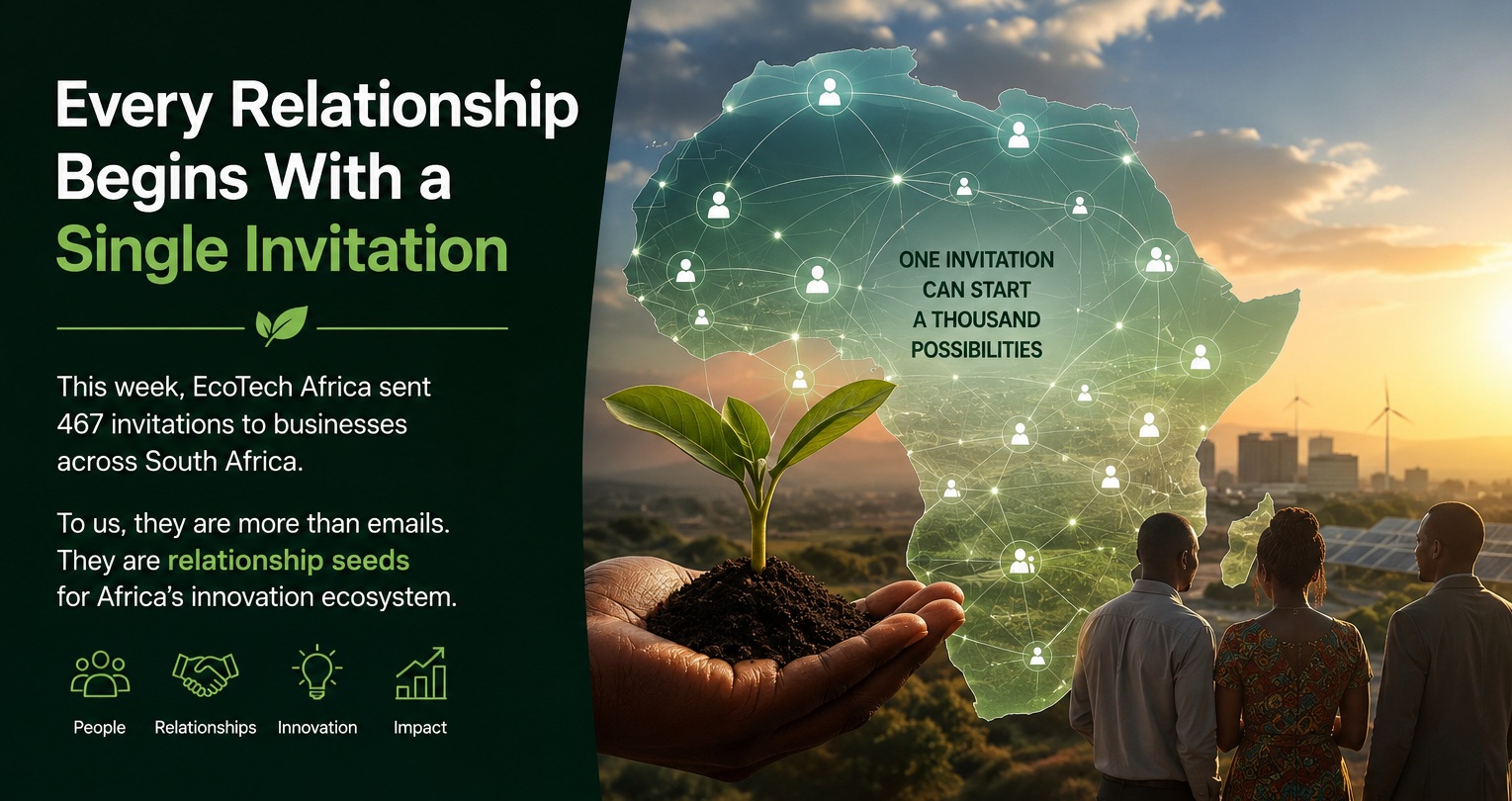
And businesses need relationships that cross borders.
Africa’s competitive advantage will increasingly depend on how well these pieces connect.
Africa’s future will not be built by isolated projects. It will be built by connected ecosystems.
That is where the real opportunity lies.
EcoTech Perspective
At EcoTech, we believe the next generation of African infrastructure must do more than store information or connect people.
It must help Africa see its relationships, knowledge, businesses, opportunities and development activity as one living ecosystem.
Technology becomes powerful when it helps people find one another, understand what is happening around them and turn relationships into productive action.
Africa does not need to wait for someone else to build that system.
?We can build it ourselves.




Comments (0)
Join the Conversation
What do you think about this story? Share your view, a practical example, or a respectful challenge.
Comments are part of the EcoTech participation layer. Join from R49 once-off to participate, or log in if you already have an account.