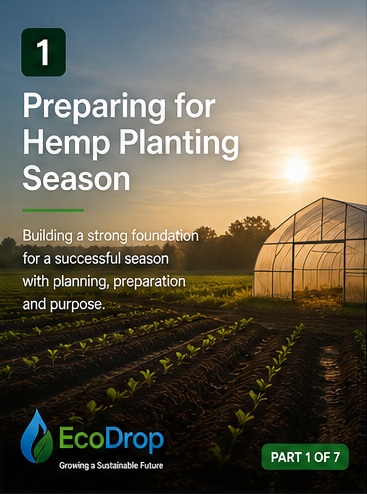
Preparing for Hemp Planting Season in South Africa
🌍 You’re reading Africa’s innovation network
EcoTech is a growing space for farmers, innovators, scientists, investors and contributors building practical sustainability solutions.
EcoDrop Operational Readiness Series
Part 1 of 7
As South Africa approaches the next hemp planting season, preparation is becoming one of the most important factors separating successful growers from those who struggle later in the cycle.
At EcoDrop Operations, we believe planting preparation starts long before seeds enter the ground. Farmers, suppliers, production planners, and support teams all need to begin coordinating early to ensure that operational readiness aligns with seasonal timing.
Key Areas Farmers Should Focus On
1. Land Preparation
Proper land preparation remains one of the most important foundations for successful hemp cultivation.
Farmers should begin assessing:
- Soil condition
- Drainage capability
- Existing weed pressure
- Water access
- Access roads and logistics
- Greenhouse or infrastructure requirements
2. Seed Availability
Seed sourcing should be planned early due to increasing demand and limited certified supply availability.
EcoDrop is currently building supplier and allocation structures to assist approved farmers with:
- Seed supplier coordination
- Availability tracking
- Readiness forecasting
- Supplier engagement
3. Compliance & Documentation
Farmers should ensure that:
- Permit documentation is updated
- GPS locations are verified
- Farm information is complete
- Operational records are available
Traceability and operational visibility are becoming increasingly important within modern agricultural systems.
4. Operational Readiness
EcoDrop Operations is developing systems that help track:
- Farmer onboarding
- GPS mapping
- Crop readiness
- Supplier coordination
- Production planning
- Validation readiness
The objective is to reduce operational fragmentation while improving visibility across the ecosystem.
Building for the Long Term
The future of agricultural operations will increasingly depend on integrated systems that connect:
- Farmers
- Suppliers
- Production
- Investors
- Validation and traceability
The planting season is therefore not only about cultivation — it is about operational coordination.
EcoDrop Operations continues preparing the infrastructure required to support scalable agricultural participation across multiple sectors.




Comments (0)
Join the Conversation
What do you think about this story? Share your view, a practical example, or a respectful challenge.
Comments are part of the EcoTech participation layer. Join from R49 once-off to participate, or log in if you already have an account.