
From Ghana to Kenya: Africa’s Trade Future Depends on Businesses That Can Connect.
🌍 Vous lisez le réseau africain de l’innovation
EcoTech est un espace en croissance pour les agriculteurs, innovateurs, scientifiques, investisseurs et contributeurs qui construisent des solutions pratiques de durabilité.
Africa has spent decades discussing the economic advantages of trading within its own borders. The African Continental Free Trade Area (AfCFTA) provides a framework for making that ambition practical.
But a trade agreement alone does not connect a Ghanaian manufacturer to a Kenyan distributor. It does not establish whether a business is legitimate, whether its products meet market requirements, or whether a cross-border partnership can deliver.
Those responsibilities must increasingly be carried by Africa's enterprises, institutions and participating communities.
Ghana and Kenya: From policy to practical trade
Ghana and Kenya were among the first countries to participate in the AfCFTA Guided Trade Initiative, launched in October 2022 to demonstrate how commercial trade could operate under the agreement.
The programme has produced tangible activity.
During an October 2025 parliamentary engagement, Ghana's Parliamentary Committee on Trade reported that 63 Ghanaian small and medium enterprises had exported to Kenya through the initiative, with support from the Ghana Export Promotion Authority.
This is a meaningful development. It shows that continental trade can move beyond agreements and declarations into actual enterprise participation.
Yet the larger question remains: how can thousands more African enterprises develop the relationships and capabilities necessary to participate?
The opportunities are broader than exports
In February 2025, Kenyan and Ghanaian officials discussed stronger cooperation among micro, small and medium enterprises.
The discussion highlighted financing, market access, logistics and the potential of Ghanaian agricultural products and Kenyan value chains.
Those discussions point to opportunities across several industries:
- Agriculture and food processing, where producers can develop regional markets and stronger supply relationships.
- Manufacturing, where businesses can collaborate on inputs, processing and distribution.
- Logistics and digital services, which can help enterprises operate across borders.
- Research and innovation, where technical knowledge can support products and services designed for African conditions.
- Enterprise development, where business networks can help smaller participants become commercially ready.
The opportunity is not simply to move more goods. It is to create more value within Africa before those goods reach their final markets.
The missing link: Enterprise recognition and coordination
For many smaller African businesses, the challenge is not a lack of ambition.
It is knowing whom to approach, how to demonstrate credibility, where to find opportunities and how to establish working relationships.
A business may have a valuable product without knowing which distributors operate in another African country. A researcher may have a useful technology without access to a suitable manufacturing partner. An entrepreneur may be ready to expand but lack the information needed to enter another market responsibly.
Continental trade therefore requires more than tariffs and transport routes.
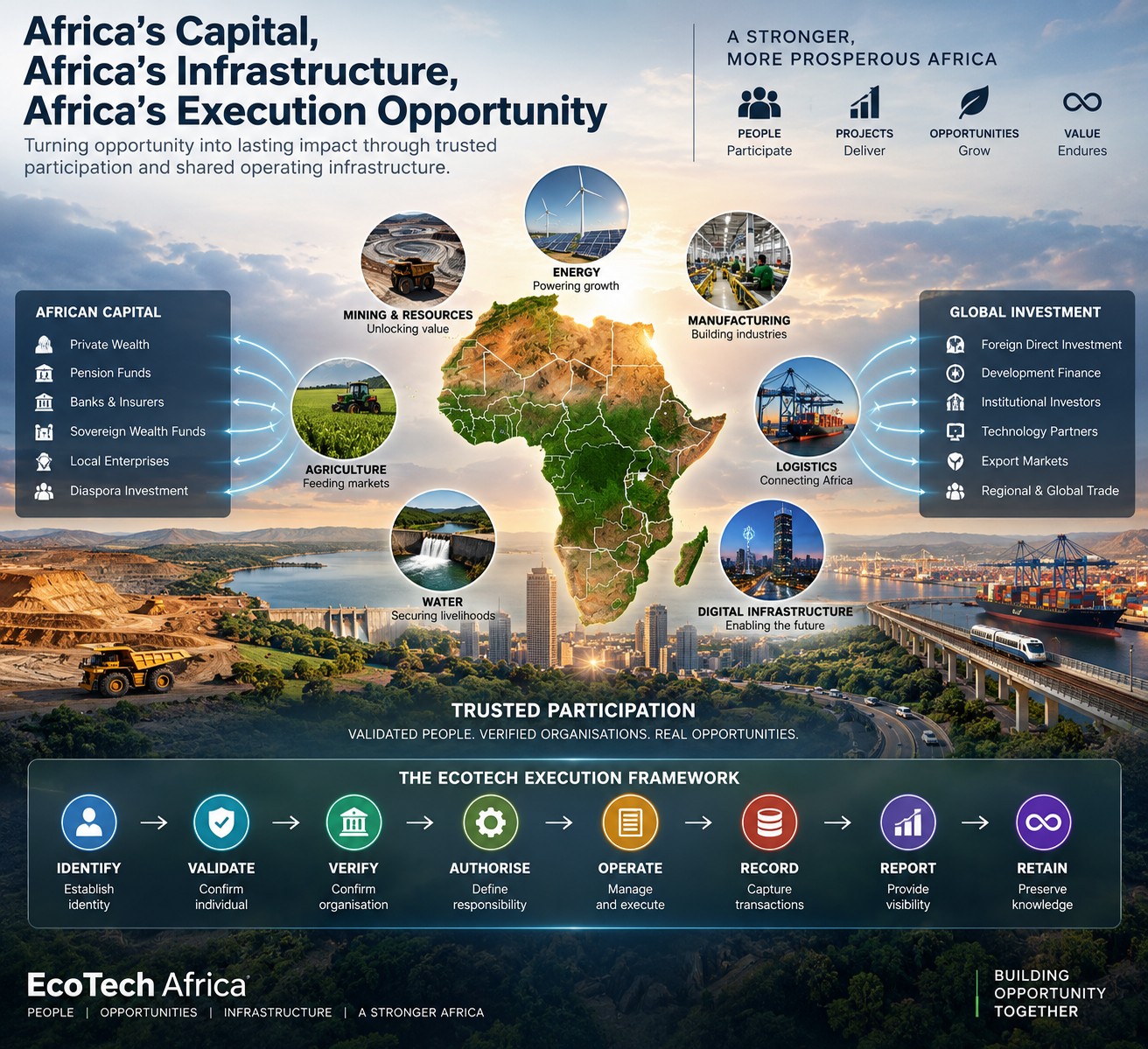
It also requires reliable business identities, accessible information, documented responsibilities and practical collaboration.
From national opportunity to continental participation
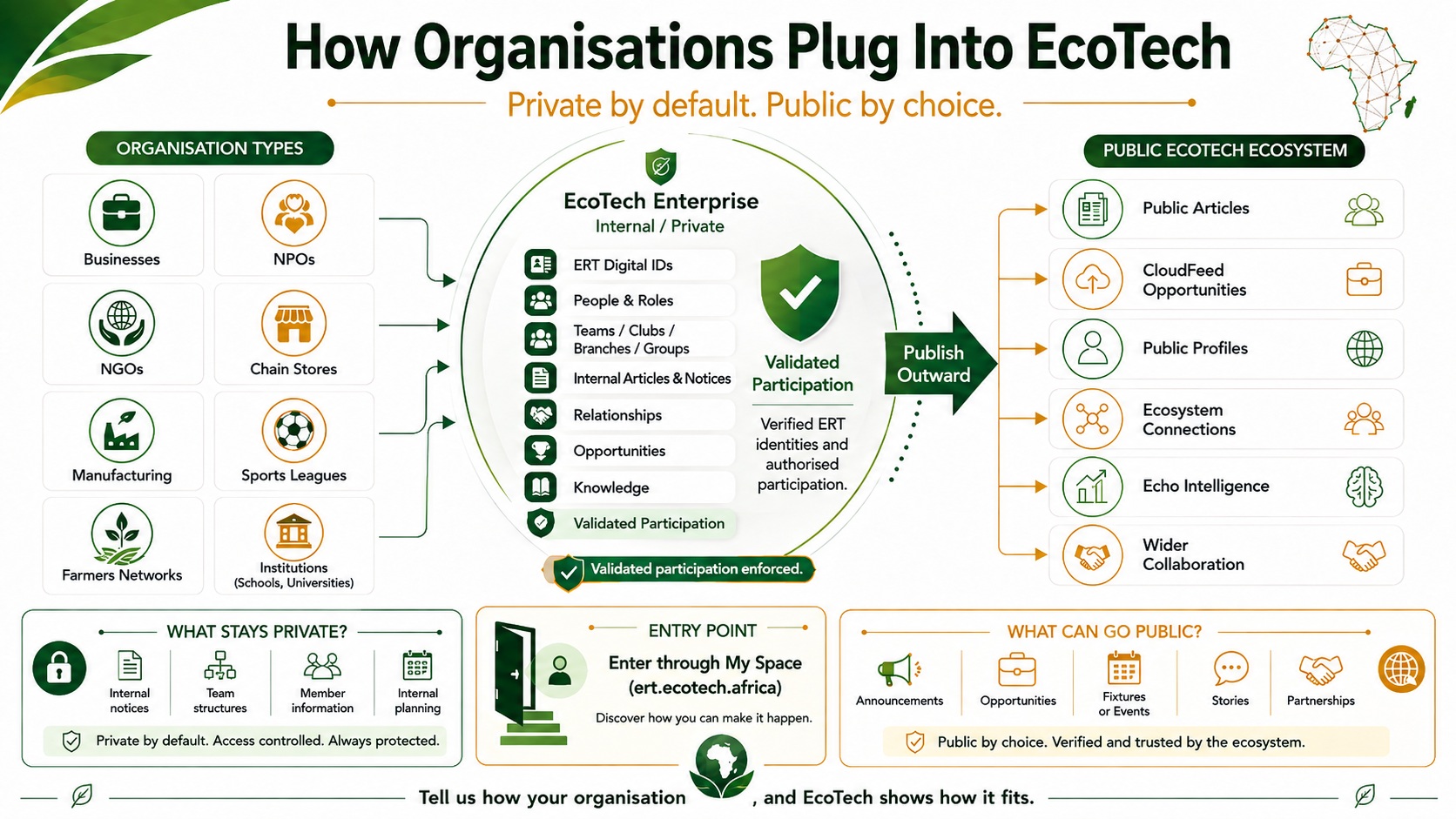
EcoTech Africa's Africa in the Making approach supports this practical dimension of African economic development.
Through its country ecosystems, participants can establish their presence, discover industries, share knowledge, present opportunities and develop relationships.
For Ghana and Kenya, the approach is straightforward: recognise the enterprises and people who want to contribute, connect their capabilities to appropriate opportunities, and support collaboration through accountable participation.
The platform does not replace national trade authorities, customs requirements, commercial due diligence or the institutions responsible for AfCFTA implementation.
Instead, it provides a participation framework through which African businesses and individuals can become more visible and better connected.
The next measure of African integration
Trade agreements should ultimately be judged not only by the number of countries that sign them, but also by the enterprises that can use them.
Can a Ghanaian food processor identify a legitimate Kenyan buyer?
Can a Kenyan technology business collaborate with a Ghanaian enterprise?
Can African innovators, service providers and manufacturers find one another without waiting for another continental conference?
These are practical questions with practical answers.
Ghana and Kenya have already demonstrated that trade under the AfCFTA can take place.
The next challenge is to broaden that participation so that more African businesses can move from interest to recognised capability, from introductions to partnerships, and from partnerships to measurable economic activity.
Africa's future will not build itself. African participation is how we begin building it.
EcoTech Africa | Africa in the Making | Agenda 2063
Cet article n’est qu’un début.
Découvrez les pays, les secteurs et les possibilités liés aux idées que vous venez de lire. Explorez librement, puis participez lorsque vous serez prêt.



Commentaires (0)
Rejoindre la conversation
Que pensez-vous de cet article ? Partagez votre point de vue, un exemple pratique ou une objection respectueuse.
Les commentaires font partie de la couche de participation EcoTech. Rejoindre à partir de R49, paiement unique to participate, or se connecter si vous avez déjà un compte.