
Why Must Africa Go to America to Find Africans?
🌍 Vous lisez le réseau africain de l’innovation
EcoTech est un espace en croissance pour les agriculteurs, innovateurs, scientifiques, investisseurs et contributeurs qui construisent des solutions pratiques de durabilité.
🌍 Help Build Africa’s Digital Relationship and Transaction Infrastructure
EcoTech welcomes African technology builders, payment providers, researchers, businesses, institutions and investors interested in strengthening African-owned digital infrastructure, cross-border transactions, trusted business relationships and the retention of economic value within Africa.
Voir le parcours de participationAfrica speaks increasingly about sovereignty, continental trade, digital transformation, African Renaissance, innovation and the need to build stronger relationships across the continent.
Yet there is an uncomfortable contradiction sitting underneath much of that ambition.
When an African organisation wants to find Africans interested in African development, African entrepreneurship, African trade, African agriculture, African technology or even the idea of an African Renaissance, where does it often go looking?
LinkedIn.
Facebook.
WhatsApp.
Instagram.
Google.
Platforms built, owned and operated largely outside Africa.
An African entrepreneur can find a group discussing African development on an American platform, identify African participants through an American database, communicate with them through foreign digital infrastructure and then attempt to persuade them to participate in an African-built system.
That contradiction should make us think.
The problem is not simply that Africans use global technology. Global platforms have created enormous value, and Africa should participate confidently in the global digital economy.
The deeper question is this:
Where are Africa's relationships being built, where is the knowledge about those relationships being accumulated, and where does the economic value created by those relationships ultimately remain?
The problem is bigger than data storage
Discussions about digital sovereignty often begin with data.
Where is African data stored?
Who has access to it?
Which laws govern it?
Those questions matter.
But there is another form of data that may be even more important: relationship data.
A digital platform does not only know your name.
Over time, it begins to understand what interests you, who you follow, which organisations you engage with, which industries matter to you, what content attracts your attention, which communities you belong to and which relationships influence your decisions.
When millions of Africans spend years building professional, commercial and social relationships on external platforms, those platforms accumulate an increasingly sophisticated understanding of African society.
They learn where African communities form.
They learn what African entrepreneurs are interested in.
They learn who influences particular industries.
They learn which stories travel.
They learn which businesses attract attention.
They learn which people are connected.
The individual African participant may own a profile.
But the platform owns the network intelligence.
That distinction matters.
Then an African platform starts from zero
Imagine an African technology company building infrastructure specifically designed for African businesses, entrepreneurs, researchers, organisations and communities.
The technology may work.
The platform may exist.
The opportunity may be real.
But the relationships are somewhere else.
The African company therefore has to return to the foreign platform and effectively say:
Help us find Africans so that we can invite them onto African infrastructure.
That is one of the most difficult problems facing African-built digital systems.
It is not necessarily the technology.
It is migration.
People already have their contacts somewhere else.
Their groups are there.
Their professional history is there.
Their audience is there.
Their habits are there.
Their credibility may already be established there.
Even somebody who strongly believes in African development may still instinctively say:
“Send me the LinkedIn link.”
That is the power of infrastructure.
Once relationships become embedded inside a system, moving them becomes difficult.
Africa must think about relationship retention
This is why Africa's digital discussion cannot stop at data protection.
We also need to think about relationship retention.
If Africans continually build the continent's professional, commercial and intellectual relationships inside systems controlled elsewhere, then a significant part of Africa's social and economic intelligence is being structured somewhere else.
That does not mean Africans should abandon global platforms.
It means Africa should deliberately build and support infrastructure where African relationships can also accumulate.
Because relationships are economic assets.
A trusted connection between a farmer and a processor has value.
A relationship between a researcher and an investor has value.
A relationship between a small business and a continental buyer has value.
A relationship between an African entrepreneur and the diaspora has value.
A network of thousands of those relationships becomes economic infrastructure.
There is also a money problem
The contradiction becomes even clearer when money enters the discussion.
Africa spends enormous amounts of money every year using foreign software, cloud infrastructure, advertising systems, social platforms and digital services.
And there is nothing inherently wrong with paying for useful products.
The problem comes when African digital participation overwhelmingly creates value elsewhere while African-built infrastructure struggles to attract the support required to survive.
The cycle often looks like this:
African users create activity.
African businesses create content.
African audiences create attention.
African companies buy advertising.
African bank cards are charged.
Revenue leaves the African digital ecosystem.
Then Africa asks where the money will come from to finance local innovation, software development, research, digital infrastructure and employment.
Part of the answer may already be leaving through our bank accounts every month.
Africa is easy to charge
There is another contradiction that Africans encounter every day.
A technology company on another continent can often debit an African bank card almost effortlessly.
Subscriptions renew automatically.
Software gets paid.
Advertising gets paid.
Cloud services get paid.
Streaming services get paid.
The border almost disappears.
But let two African businesses attempt to transact across an African border and the experience can become very different.
Currency conversion.
Banking restrictions.
Payment gateways.
Compliance requirements.
Intermediaries.
Fees.
Settlement delays.
Limited payment methods.
Different banking systems.
Different currencies.
The result is a strange situation:
Africa has become remarkably easy for the world to charge, while Africans can still find it unnecessarily difficult to pay one another.
That should concern anyone serious about continental economic integration.
African trade cannot only mean trucks crossing borders.
In the modern economy, services, professional expertise, digital products, information, investment and small-business payments must also move.
An African entrepreneur should eventually find it as natural to pay another African entrepreneur as it is to subscribe to software on another continent.
Keeping African money in African circulation
Supporting African-built platforms therefore has an economic dimension that deserves much more attention.
When African participants use African infrastructure, some of the revenue created by that activity can remain inside African economic circulation.
That money can fund African developers.
African hosting infrastructure.
African researchers.
African verification systems.
African publishing.
African support teams.
African training.
African jobs.
African businesses.
African expansion.
African innovation.
The cycle begins to change:
African participation creates African revenue.
African revenue strengthens African infrastructure.
African infrastructure enables more African participation.
More participation creates more relationships.
Those relationships create more African economic activity.
That is how infrastructure compounds.
Supporting African technology is therefore not simply an act of loyalty or charity.
It is participation in building an economic asset.
But technology is not Africa's deepest problem
There is an even more difficult truth.
Africa's fragmentation is not only technological.
It is not only financial.
It is relational.
Across the continent, people can live within the same country and still be divided by ethnicity, language, religion, political allegiance, geography, class or historical grievance.
At its worst, those divisions have contributed to horrific violence, mass atrocities and genocide.
It would be wrong to conclude from this that Africans cannot work together.
Africans cooperate every day across communities, borders, industries and cultures.
But we should also not pretend that continental unity automatically exists simply because political leaders speak about integration.
Trust has to be built.
Relationships have to be built.
Economic interdependence has to be built.
People must experience tangible value from working together.
Africa cannot integrate only at summit level.
Integration has to become useful to ordinary people.
The deepest infrastructure is trust
We often think about infrastructure as roads, railways, ports, electricity, fibre and data centres.
All of those are essential.
But Africa also needs another form of infrastructure.
Trusted relationships between Africans.
A farmer in Zambia should be able to find a processor in South Africa.
A manufacturer in Ghana should be able to locate a supplier in Kenya.
A researcher in Rwanda should be able to discover a relevant enterprise in Nigeria.
A diaspora professional should be able to identify credible African projects.
An entrepreneur in Malawi should be able to build a commercial relationship with somebody in Côte d'Ivoire without first needing an American social network to introduce them.
When Africans can discover one another, verify one another, transact with one another and build value with one another, continental integration stops being an abstract policy objective.
It becomes normal economic behaviour.
Africa does not need digital isolation
None of this requires Africa to withdraw from the global digital economy.
That would make little sense.
African businesses should use the best technologies available to them.
They should trade internationally.
They should participate globally.
They should use international platforms where those platforms create value.
But participation should not become dependency.
Africa should be able to stand in the global digital economy while also owning meaningful parts of its own infrastructure.
The objective is not:
Africa versus the world.
The objective is:
Africa participating in the world from a stronger position.
We must build places where African knowledge stays connected to African people
This becomes particularly important as artificial intelligence develops.
The future of AI will depend heavily on structured knowledge.
Who is connected to whom?
Which companies operate in which industries?
What organisations exist?
What opportunities are emerging?
Who has which expertise?
Which documents matter?
Which relationships are trusted?
If Africa's knowledge environment is built primarily somewhere else, then intelligence about Africa will increasingly be produced from structures Africans do not control.
That is why African-built infrastructure matters beyond the businesses that own it.
It can become part of the continent's knowledge architecture.
Africa should not only contribute information to systems that learn about Africa.
Africans should increasingly participate in building the systems through which Africa understands itself.
This is where African-built platforms matter
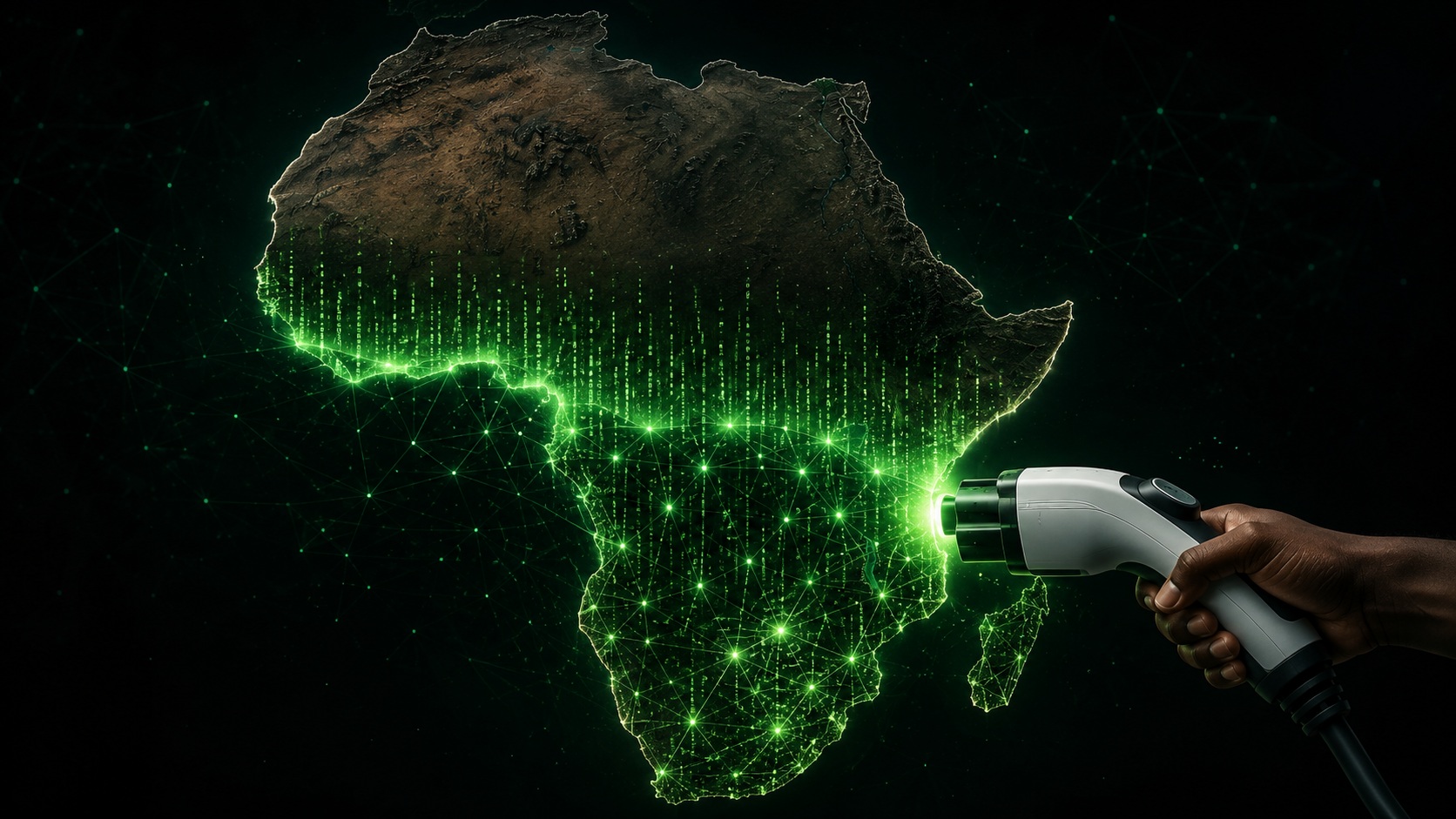
Platforms such as EcoTech should therefore not be understood simply as another website competing with international social networks.
The opportunity is different.
The objective should be to create infrastructure where African participants can establish verified identities, represent enterprises, publish knowledge, maintain documents, discover opportunities, create commercial relationships and participate across industries and countries.
Not to replace everything that already exists.
But to create an African layer of infrastructure underneath African participation.
If those relationships begin to accumulate, something significant changes.
Africa starts retaining not only data.
It starts retaining institutional memory.
Commercial relationships.
Knowledge.
Economic activity.
And eventually, economic value.
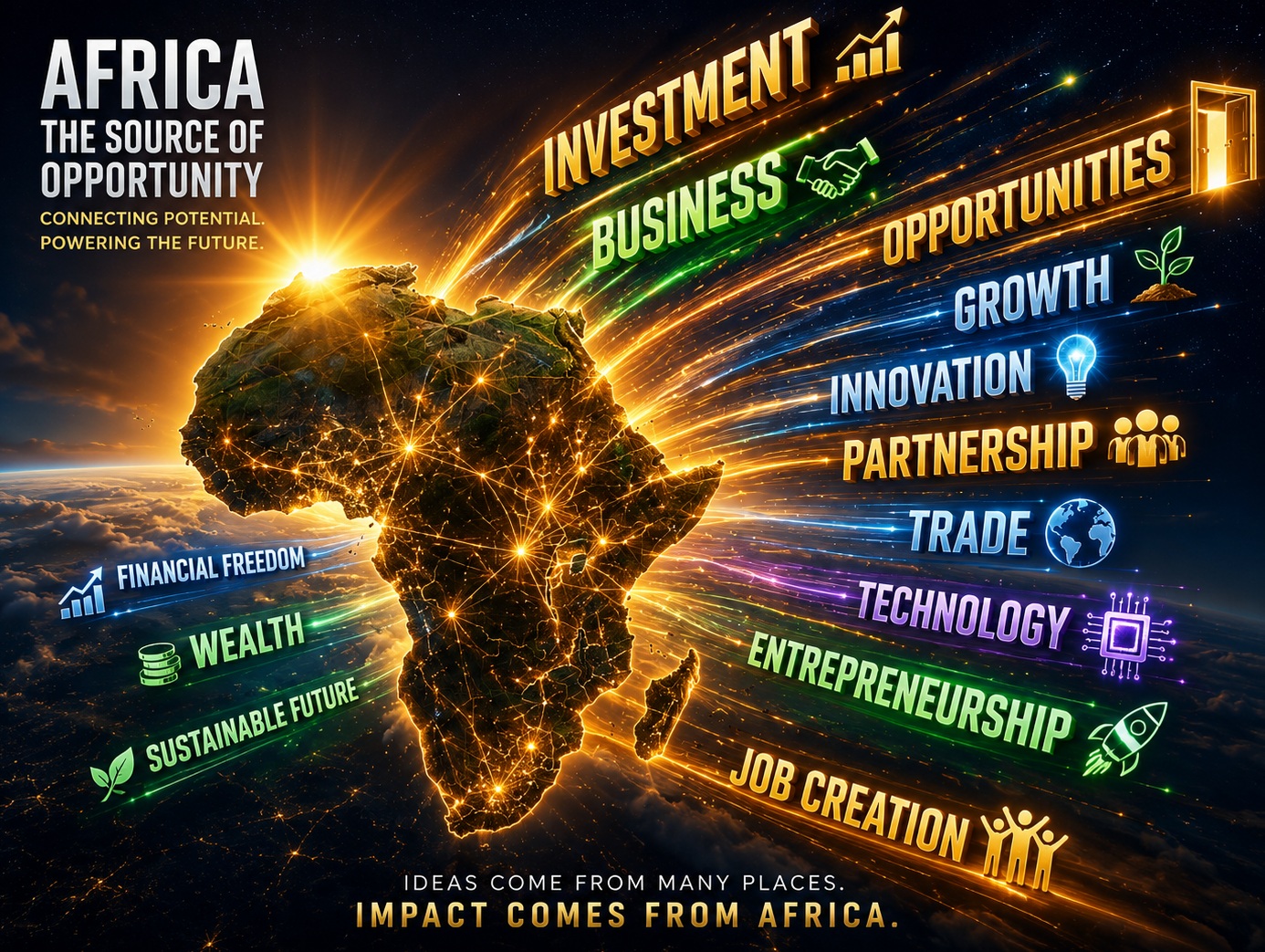
The African Renaissance must have infrastructure
The phrase “African Renaissance” is powerful.
But a renaissance cannot exist only in speeches, conferences, books and social-media groups.
It needs systems.
It needs companies.
It needs databases.
It needs payment infrastructure.
It needs institutions.
It needs trusted identities.
It needs marketplaces.
It needs publishing.
It needs relationships.
And Africans need to use those systems.
Otherwise we risk discussing African renewal on infrastructure owned somewhere else, paying somebody else for the privilege, while wondering why African digital institutions struggle to emerge.
There is nothing wrong with Africa participating on global platforms.
But something should concern us when Africans cannot easily find one another without them.
Something should concern us when money can leave African bank accounts more easily than it can circulate between African businesses.
Something should concern us when African knowledge, audiences and relationships continuously strengthen infrastructure elsewhere while African-built systems remain under-supported.
And something should concern us when Africans remain so disconnected from one another that division can still overwhelm cooperation.
Technology cannot solve all of that.
But infrastructure can create conditions in which cooperation becomes easier.
And repeated cooperation builds trust.
The choice is not technological. It is structural.
Africa does not have to build every piece of technology it uses.
No continent does.
But Africa does need to ask a more serious question:
How much of the infrastructure carrying African economic, intellectual and social life should Africans themselves own, operate and strengthen?
Because the answer will determine much more than where our data is stored.
It will influence where our money goes.
Where our relationships develop.
Where our knowledge accumulates.
Where our companies grow.
And who benefits economically from Africa's digital future.
Africa should participate everywhere.
But Africa must also build somewhere of its own.
Because an African Renaissance cannot depend entirely on somebody else's infrastructure.
🚀 Help Build Africa’s Digital Relationship and Transaction Infrastructure
EcoTech welcomes African technology builders, payment providers, researchers, businesses, institutions and investors interested in strengthening African-owned digital infrastructure, cross-border transactions, trusted business relationships and the retention of economic value within Africa.
Ce parcours est directement lié à cet article publié. Parcourez les opportunités EcoTech pour voir celle-ci et d’autres parcours de participation actifs aux côtés des opportunités CloudFeed.


Commentaires (0)
Rejoindre la conversation
Que pensez-vous de cet article ? Partagez votre point de vue, un exemple pratique ou une objection respectueuse.
Les commentaires font partie de la couche de participation EcoTech. Rejoindre à partir de R49, paiement unique to participate, or se connecter si vous avez déjà un compte.